

Brief every contractor before they arrive, name one site contact, and put it in writing. HSE guidance on managing contractors shows accidents happen when this step gets skipped, and a platform like Prop Report exists to make skipping it harder.
TL;DR:
- Proper vetting involves verifying trade qualifications and insurance for medium-risk jobs and requiring full risk assessments and registration for high-risk tasks.
- Contractors must be briefed and documented thoroughly before arrival, regardless of job size, to prevent delays, tenant complaints, and safety incidents.
- Maintaining detailed records of contractor communications, scope changes, and sign-in times is essential for compliance and proof during inspections.
- A designated, competent site contact should oversee scope approval, incident reporting, and progress checks to reduce avoidable risks on site.
- Centralized communication platforms like Prop Report streamline documentation, ensure compliance, and reduce the chances of overlooked safety steps or miscommunication.
Table of Contents
- Why contractor communication that property managers use daily actually matters
- How to vet contractors proportionate to risk
- What legal duties and regulations should landlords remember?
- Building a pre-appointment and on-arrival checklist
- Coordinating and supervising work once contractors are on site
- How Prop Report supports this checklist in practice
- Getting contractor communication right starts with one habit
- Automate the contractor briefs manual checklists miss
- Where to check the rules yourself
- Sources
- FAQ
Why contractor communication that property managers use daily actually matters
Poor contractor communication does not just cause paperwork headaches. HSE guidance on managing contractors shows accidents and unsafe changes to work happen when contractors are excluded from normal site safety procedures, often because nobody told staff or occupiers a contractor was even on site that day.
The operational fallout tends to arrive first, before anyone gets hurt. A missed brief becomes a delayed job, a delayed job becomes a tenant complaint, and a badly documented visit becomes a failed inspection months later when nobody can prove what happened.
Two scenarios play out constantly across property portfolios:
- A contractor turns up unannounced, and the tenant refuses entry because nobody warned them.
- The scope changes mid-job (a "quick boiler check" turns into a full replacement) and nobody records the new risk or cost.
Statistic callout: HSE's own guidance identifies communication failure, not skills gaps, as the recurring root cause behind contractor incidents on managed premises. That single finding should reshape how most property managers think about vetting.
How to vet contractors proportionate to risk
Not every job needs the same paperwork. HSE's guide on using contractors is explicit: the level of competence enquiry should match the risk and complexity of the work, not a fixed company-wide template.
- Low-risk jobs (minor repairs, decorating): a short competence check and proof of public liability insurance is usually sufficient.
- Medium-risk jobs (electrical work, plumbing, roofing): request trade qualifications, insurance certificates, and at least one recent reference.
- High-risk jobs (gas work, structural changes, asbestos-adjacent work): demand a full risk assessment and method statement (RAMS), Gas Safe or equivalent registration, insurance, and evidence they vet their own subcontractors.
Red flags worth acting on immediately: no fixed business address, reluctance to provide insurance documents, or a method statement that reads as copied from another job entirely.
Pro Tip: Keep a short written log of who you asked, when, and what evidence you saw for every contractor engagement. HSE's own guidance on managing contractors treats this record as your proof of "reasonable steps" if an inspector ever asks.
What legal duties and regulations should landlords remember?
Contractor communication is not just good practice. The Construction (Design and Management) Regulations 2015 set specific duties on both sides of the relationship:
- Clients must provide pre-construction information and appoint appropriate duty-holders before work starts.
- Contractors must prepare risk assessments and method statements that align with the client's own assessment.
- HSE's practical guidance (HSG159 and INDG368) expects proportionate checks, clear site rules, and evidence of communication, not a mountain of paperwork for every job.
- Landlords carry an added duty around gas: HSE requires annual gas safety checks by Gas Safe registered engineers, with certificates issued to tenants and records retained.
Do not treat a contractor's text message confirming "job done" as your compliance record for gas work. The certificate itself is the evidence inspectors want to see.
Building a pre-appointment and on-arrival checklist
Most communication failures happen in the gap between booking a contractor and them walking through the door. Close that gap with a short, repeatable checklist.
Before the visit, confirm:
- The full scope of work, in writing, not a verbal summary.
- Known site hazards (asbestos registers, restricted areas, shared access points).
- Access arrangements and any tenant notice periods required.
- Whether a permit-to-work applies for higher-risk tasks.
On arrival, run through:
- Sign the contractor in and check photo ID against the booking.
- Brief the named site contact on scope, hazards, and emergency arrangements.
- Confirm whether the contractor needs escorting or can work unsupervised.
- Record arrival time, ID checked, and who delivered the briefing.
A simple spreadsheet or template works for one property. Across a portfolio, that same manual process becomes the first thing that quietly stops happening under time pressure.
Coordinating and supervising work once contractors are on site
Nominate one competent site contact for every job, not a rotating cast of whoever answers the phone. HSE guidance on managing contractors identifies the absence of a reliable site contact as a specific, avoidable risk factor.
That contact should own a short list of responsibilities:
- Approving any change to the agreed scope before work continues, not after.
- Making sure contractors know how to report incidents or near misses, and to whom.
- Checking in at set points during longer jobs rather than assuming silence means progress.
Pro Tip: Treat scope changes as a trigger for a fresh mini-brief, not an email you'll read later. A boiler service that becomes a full replacement carries different hazards, different access needs, and sometimes a different competence requirement entirely.
Keep records of sign-in times, briefing notes, scope changes, and any incidents for at least as long as your insurer or local authority expects, and longer for gas and electrical work where certificates need to reach tenants directly.

How Prop Report supports this checklist in practice
A written checklist only works if someone actually follows it on the fifteenth job of the week, not just the first. That is the practical gap a centralised comms hub is built to close.
Prop Report brings pre-appointment briefs, sign-in confirmations, and contractor messages into one thread instead of scattered texts and calls. A few things worth knowing:
- The platform holds ISO 27001 certification, covering how contractor and tenant data gets stored and accessed.
- Automated reporting keeps a timestamped record of briefings and scope changes without extra admin.
- Integration with existing CRM systems means the audit trail sits alongside your other property data, not in a separate system nobody checks.
Any platform used this way should give you an auditable trail you could hand an inspector without a scramble.
Getting contractor communication right starts with one habit
Adopt one non-negotiable habit: a mandatory pre-visit brief with a named site contact, recorded every single time, no exceptions for "quick jobs." Most contractor failures trace back to skipping this exact step under time pressure, not to a lack of competent tradespeople.
Test it on your next contractor visit. Brief them properly, sign them in, write it down, and see how differently that job runs compared with the last one nobody briefed at all.
— James
Automate the contractor briefs manual checklists miss
An alternative to chasing sign-ins and briefs across texts, calls, and paper forms. Where a manual checklist depends on someone remembering to fill it in every time, Propreport's centralised communication hub keeps contractor briefs, sign-in confirmations, and scope changes in one auditable thread, backed by ISO 27001-certified data security.
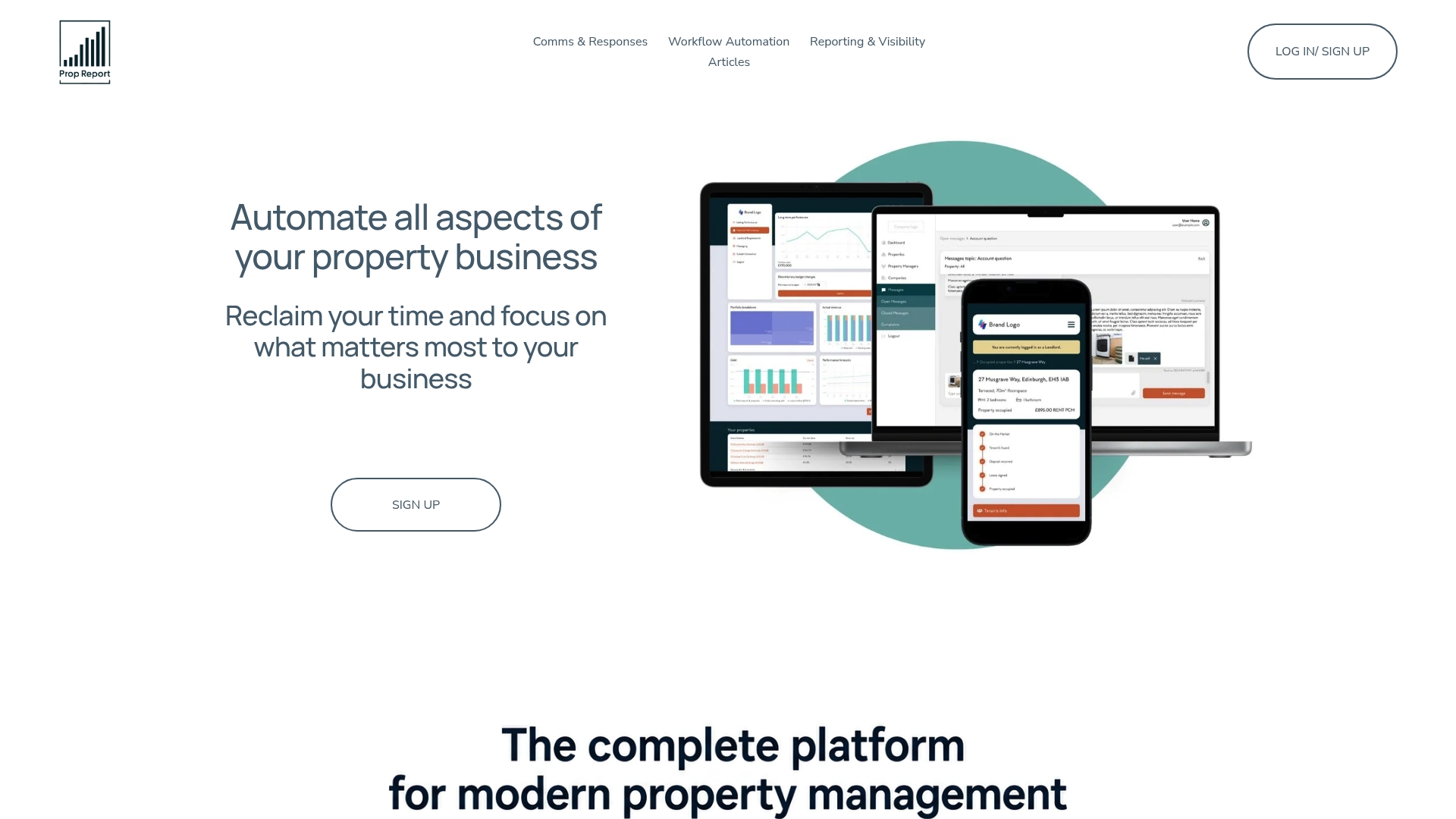
The platform brings email, SMS, and WhatsApp messages with contractors into a single view, and can connect to existing CRM systems rather than replacing them. That means the record-keeping this article covers, who was briefed, when, and what changed, happens automatically instead of relying on someone's memory at 5pm on a Friday.
Prop Report is one option among several ways to run this process, not a legal requirement. If centralising contractor communication and reporting sounds useful for your portfolio, view current plans and pricing or look at the Communications Hub to see how the audit trail works before you commit to anything.
Where to check the rules yourself
The guidance behind this checklist comes straight from the regulator, not secondhand summaries:
- Managing contractors: a guide for employers (HSG159), HSE's core guidance on contractor supervision and site communication.
- Using contractors: A brief guide (INDG368), covering proportionate vetting and pre-construction information.
- The Construction (Design and Management) Regulations 2015, the legislative basis for client and contractor duties.
- Gas safety guidance for landlords (HSE), covering Gas Safe checks, certificates, and record retention.
Sources
- Managing contractors: a guide for employers (HSG159)
- Using contractors: A brief guide (INDG368)
- Gas safety - landlords and letting agents (HSE)
- The Construction (Design and Management) Regulations 2015
FAQ
What are the two types of contractors?
Contractors are broadly split into principal contractors, who take overall responsibility for managing health and safety on a project under CDM 2015, and other contractors carrying out specific trade work under that principal contractor's coordination. On smaller landlord-managed jobs, a single contractor often takes on both roles at once.
Why is communication important on a construction site?
Clear communication prevents accidents that happen when staff, tenants, or other contractors do not know work is taking place nearby. HSE's guidance on managing contractors points to poor communication about site hazards, rules, and supervision as a repeated cause of avoidable incidents.
What does a telecommunications contractor do?
A telecommunications contractor installs, maintains, or repairs communication infrastructure such as cabling, broadband equipment, or satellite systems within a property. The same vetting and communication principles apply: match the depth of checks to the complexity of the installation and confirm access arrangements before they arrive.
How much does Prop Report cost?
Prop Report offers several plans, from the Individual plan at £10 per month up to the Pro plan at £525 per month, depending on portfolio size and features needed. Additional message fees apply for SMS and WhatsApp communication sent through the platform.
What documents should I ask a contractor for before high-risk work?
For higher-risk jobs such as gas or structural work, request a risk assessment and method statement (RAMS), proof of relevant registration such as Gas Safe, current insurance certificates, and a recent reference. HSE guidance confirms the depth of these checks should scale with the risk involved, not apply uniformly to every job.