

The correct approach to syncing property records across your management software, CRM and finance systems is simple to state and hard to execute well: it must be secure, minimal, and auditable. That means scoped API access, idempotent operations that survive retries without duplicating data, and detailed audit logs on every sync event. Anything less turns a routine integration into a data protection liability, with Propreport built specifically to meet that standard.
TL;DR:
- Secure and minimal API access, with detailed audit logs, is essential to prevent legal risks and operational chaos in property data syncs.
- Using idempotent operations and delta-syncing reduces processing load, prevents duplicate data, and limits personal data in transit.
- Contracts must include encryption, independent attestation, audit rights, and field-specific access controls to ensure proper security and compliance.
- Testing in a sandbox with automated reconciliation and pilot runs on complex properties helps prevent silent data corruption during deployment.
- Platforms like Propreport centralize data in one ISO 27001-certified system, eliminating multiple points of failure and improving overall data governance.
Table of Contents
- Why secure, minimal syncing matters for property data
- Technical patterns that keep a property data sync reliable
- What to check before signing off on an integration
- Building and testing a safe sync: a step-by-step plan
- Why a security-first approach pays for itself
- How Propreport handles this for you
- Sources
- FAQ
Why secure, minimal syncing matters for property data
Syncing tenant and property records across systems is not a technical convenience. It is a legal responsibility that sits squarely with you, not your software vendor.
Under UK GDPR, you remain the data controller even when a third-party processor handles the actual syncing. That accountability does not transfer just because a CRM or finance platform is doing the heavy lifting behind the scenes, and contracts must include Article 28/32 guarantees covering security measures, restoration capability, and regular testing.
The ICO's data minimisation principle is where most integrations fail before they even start. Syncing an entire tenant database because "it's easier" is a compliance risk, not a shortcut.
Beyond the legal exposure, poorly designed syncs create operational chaos:
- Accidental overwrites when two systems write to the same field simultaneously, silently erasing a manual correction
- An expanded breach surface, since every additional system holding personal data is another target
- Hours lost each month to manual reconciliation when nobody trusts the numbers two systems are showing
Property managers rarely notice these costs until a tenant disputes a balance or an owner questions a report that does not match their bank statement.
Technical patterns that keep a property data sync reliable
Ask any competent integration partner about these five patterns before signing anything. If they cannot explain them plainly, that is a red flag.
- Idempotent operations. Every sync action should produce the same result whether it runs once or five times. This matters because networks fail and retries happen. Idempotent design, recommended by NCSC for resilient integrations, prevents duplicate rent charges or doubled maintenance tickets when a connection drops mid-transfer.
- Delta-syncing and change feeds. Rather than pulling the entire property database on every run, a well-built sync only moves what has changed since the last successful pass. This reduces both processing load and the volume of personal data in transit at any moment.
- Domain update locks and optimistic locking. When two systems can both write to the same tenancy record, you need a defined "write ownership" rule per field, backed by optimistic locking that blocks concurrent writes from clobbering each other.
- Scoped API access. Read-only access should be the default for anything that does not need to write. Write access, particularly for financial or tenancy-status fields, deserves its own risk tier and extra scrutiny before it is granted.
- Privileged administration controls. Multi-factor authentication, just-in-time access, and auditable admin APIs stop a compromised login from becoming a full data breach, a standard NCSC applies to any cloud administration interface.
Pro Tip: Ask any prospective integration provider to show you a sample audit log entry, not just describe one. If it doesn't record who changed what, when, and why, keep looking.
What to check before signing off on an integration
Before you approve a sync between your property management software and a CRM or finance platform, work through this list with whoever is proposing the integration.
Contract terms should be non-negotiable. Article 28(3) requires a written processor contract to spell out the nature and purpose of processing, exactly which categories of data move between systems, the processor's obligations, and rules on audits and sub-processors.
Security controls need to go beyond a vendor's marketing page:
- Encryption in transit and at rest, with vulnerability management as an ongoing process rather than a one-off audit
- Independent attestation, such as ISO 27001 certification, for any provider handling tenancy or financial data
- A right to audit written into the contract, not offered informally
Operationally, insist on structured audit logs and real alerting, a demonstrated restore capability, a defined testing cadence, and a stated incident response time. One detail worth flagging: NCSC's own guidance on audit information and alerting treats visibility into abnormal activity as a baseline expectation, not a premium feature.
Finally, decide field-by-field which property and tenant data actually needs to sync, set a retention and deletion policy, and separate test environments from production so credentials never overlap between the two.
Building and testing a safe sync: a step-by-step plan
Rushing an integration live is how silent data corruption happens. Follow a sequence instead.
- Design and agree objectives. Draw a simple data-flow diagram showing every system involved and mark where trust boundaries sit, meaning where data crosses from one party's control into another's.
- Define canonical identifiers and field ownership. Decide which system is authoritative for each field, rent amount, tenancy start date, contact details, and write that conflict resolution rule down before development starts.
- Test in a sandbox first. Simulate idempotency by firing the same sync twice, simulate write conflicts deliberately, and rehearse a full rollback so you know it actually works before you need it.
- Pilot on a limited scope. Start with a handful of properties, run reconciliation checks daily, and set automated alert thresholds for anything that looks unusual.
- Operate with discipline. Set a fixed reconciliation cadence, review audit logs on a schedule rather than only when something breaks, and document forensic steps in advance for any incident.
Pro Tip: Run your pilot on your messiest properties, not your cleanest ones. If the sync handles a portfolio with split ownership and mid-tenancy rent changes cleanly, it will handle everything else.
Why a security-first approach pays for itself
A well-designed sync doesn't just satisfy an auditor. It changes how your team actually works day to day, because reconciliation stops eating hours nobody has spare, and owner reports stop needing a caveat about "figures still settling."

The risk reduction is just as real. A smaller breach surface and clear write ownership mean accountability under UK GDPR is never ambiguous when something goes wrong.
The platform is built around these standards, featuring ISO 27001 certification, a Communications Hub that keeps messaging organized, an Owners Portal for transparent reporting, and AI monitoring of automated workflows. Property teams that treat integration security as infrastructure, not an afterthought, consistently spend less time firefighting and more time managing the actual portfolio.
— James
How Propreport handles this for you
Most of the risk described above comes from stitching together point-to-point integrations between separate tools, each with its own access rules, its own logs, and its own blind spots. Propreport takes a different approach: one ISO 27001-certified platform where property, CRM and finance data lives under a single set of controls instead of three.
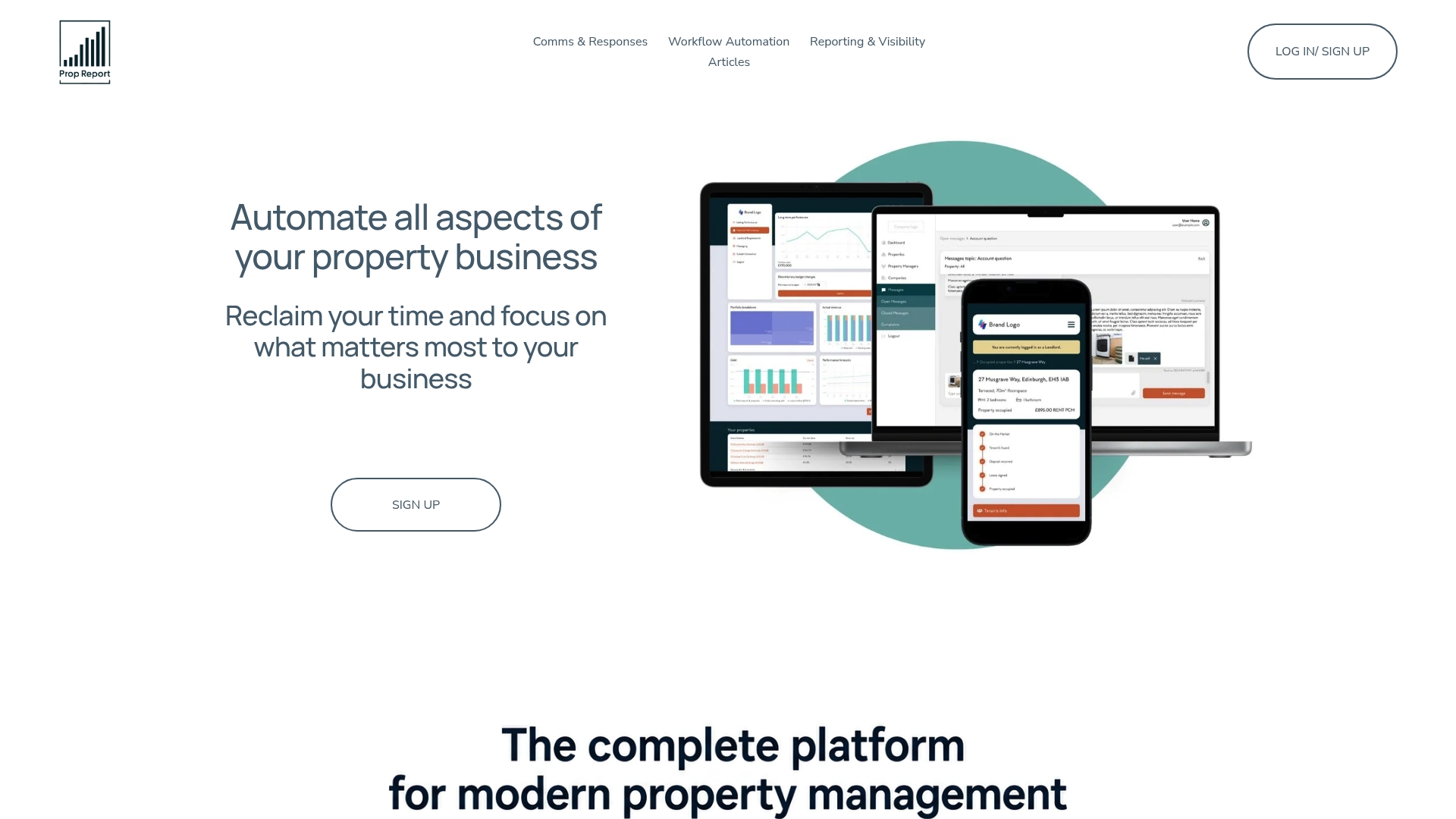
That means one audit trail instead of four, one Communications Hub replacing scattered email and WhatsApp threads, and an Owners Portal that shows landlords real-time figures without a manual reconciliation step in between. PropReport AI monitors the workflows running underneath, flagging anything that looks like an unexpected change to a property or tenant record. Onboarding is tailored to how your team already works, and plans run from Individual through to Pro depending on portfolio size, with pricing and full plan details on the Propreport pricing page. These prices vary depending on the plan and usage. If you are currently juggling three systems and trusting that nothing falls through the cracks between them, that is the problem worth solving next.
Sources
For anyone drafting a contract or briefing a technical partner, the primary sources below carry more weight than any vendor's summary of them. The ICO's guide to accountability and governance sets out what UK GDPR actually demands of you as a controller. NCSC's cloud security principles cover administration and audit logging in detail, while practical guides such as this CRM and telephony integration walkthrough show how these principles apply outside property management too.
- Guide to accountability and governance | ICO
- Principle 13: Audit information and alerting for customers | NCSC
FAQ
What data should we exclude from a property sync?
Exclude anything not strictly needed for the receiving system's purpose, following the ICO's data minimisation principle. Sensitive tenant details like ID documents or health information rarely belong in a CRM built for lead tracking.
Who is liable if a synced integration causes a data breach?
You remain the data controller under UK GDPR even when a processor handles the sync, so liability does not simply pass to your software vendor. Your processor contract needs Article 28/32 guarantees precisely because that responsibility stays with you.
How often should property data actually sync?
It depends on the field: financial data affecting rent or arrears often needs near real-time or hourly syncing, while static details like property address can update daily. Delta-syncing, moving only changed records, keeps frequent syncs light without straining either system.
What happens when two systems disagree on a tenant's balance?
This is a conflict resolution failure, usually solved by defining one system as the authoritative source for that specific field and using optimistic locking to block simultaneous writes. Without that rule set in advance, discrepancies get resolved manually and inconsistently.
Does Propreport support this kind of integration?
Yes. Propreport consolidates property, CRM and finance data under one ISO 27001-certified platform with audit logging and monitoring built in, rather than requiring separate point-to-point connections between tools.