

Email parsing can automatically extract tenant and lead fields from inbound emails and attachments and push them into your property-management system, cutting manual entry and speeding up referencing and lead follow-up. The main gains are faster response times, fewer transcription errors, and consistent records for compliance checks. Getting there needs parsing rules or OCR for attachments, a proper integration into your CRM or PM system, and data protection controls that hold up under UK GDPR.
TL;DR:
- Parsing rules should be tailored to the email source, with templates for structured portal enquiries and AI or OCR methods for unstructured or scanned documents.
- Parsed data must feed directly into the existing property-management system to ensure data consistency and avoid trust issues.
- Validation rules should ensure all required fields are captured, duplicates are checked based on email and property references, and missing data triggers human review.
- Compliance requires establishing lawful data processing, using encryption, maintaining audit logs, and reviewing data retention policies in line with recent legal reforms.
- Real-time performance monitoring should focus on parsing accuracy, response times, and the volume of tasks automatically created without manual input.
Table of Contents
- What email parsing is and how it fits property workflows
- Core use cases for property managers and letting agents
- Setting up parsing from your inbox to your property-management system
- Data protection and compliance checklist for parsing tenant data
- Operational checklist and sample parsing rules for common property emails
- Publisher perspective: why parsed data belongs in one platform
- How Prop Report turns parsed emails into one clear workflow
- Sources
- FAQ
What email parsing is and how it fits property workflows
Email parsing is the process of reading an incoming message, pulling out specific pieces of information, and turning them into structured data your software can use. Instead of an agent copying a name, phone number and viewing time from an enquiry email into a spreadsheet, a parser does it in seconds and hands the result straight to your system.
In property management, the fields that matter most tend to be consistent across emails from portals, referencing agencies and applicants themselves:
- Applicant or tenant name, phone number and email address.
- The property reference or address the enquiry relates to.
- Requested viewing times or availability windows.
- Attachments such as proof of ID, payslips or references.
- Free-text notes that hint at urgency or special requirements.
There are three broad approaches to extracting this. Keyword rules look for known patterns, such as a phone number format or the word "Viewing requested for". Template parsers work well when emails come from a limited number of portals with predictable layouts, such as Rightmove or Zoopla enquiry notifications. OCR and AI-assisted extractors read scanned or photographed documents, such as a payslip attached as a JPEG, and are needed once you move beyond plain text.
Whichever method you choose, the output has to land somewhere useful. A common mistake is building a parser that writes to a new spreadsheet or a standalone database. That creates a second version of the truth, and within a few weeks nobody trusts either copy. Parsed data should feed directly into your existing property-management system, the same place your team already checks for tenancy status, maintenance history and communication logs.
Core use cases for property managers and letting agents
Three jobs dominate the inbox for most letting teams, and each benefits from parsing in a slightly different way.
- Tenant referencing. Referencing agencies and applicants send back forms, ID scans and payslips by email. A parser can pull the applicant's name, employer, income figures and reference outcome from these documents and attach them to the correct tenancy record, rather than leaving a team member to open five attachments and retype the numbers.
- Lead follow-up and conversion. Portal enquiries and website form submissions arrive as near-identical emails. Parsing extracts the lead's contact details, the property they asked about and their preferred viewing time, then assigns the enquiry to the right agent automatically, which matters because a slow reply is often the difference between a booked viewing and a lead who has already called a competitor.
- Maintenance and repairs. Tenants reporting a leak or a broken boiler by email usually include a property reference, a description of the issue and sometimes a photograph. Parsing can extract these fields and open a maintenance ticket without anyone manually reading and re-keying the report.
- Document ingestion. Signed tenancy agreements, gas safety certificates and insurance documents often arrive as PDF attachments with no consistent naming convention. Parsing rules can identify the document type from its content and file it against the right property automatically.
The emails behind each of these use cases tend to follow a shape. A referencing agency email usually has a subject line naming the applicant and a structured body with labelled fields, which suits a template parser well. A tenant's maintenance report, by contrast, is unstructured prose, so it needs looser keyword matching or a short AI-assisted summary step to identify the property and issue type before a ticket is created. Prioritising the fields that drive the next action, rather than every field that could theoretically be captured, keeps the rules simple and the output reliable.
Setting up parsing from your inbox to your property-management system
The path from a cluttered inbox to clean records in your PM system follows a fairly standard sequence, whether you build it yourself or bring in an integration partner.

Start by deciding your extraction approach based on the variety of emails you receive. If enquiries come almost entirely from two or three portals, template rules will get you most of the way. If you also handle scanned documents, handwritten notes or emails from smaller agencies with inconsistent formatting, you will need OCR or an AI-assisted extractor for those cases specifically, rather than trying to force one method to cover everything.
Next, map the fields your PM system actually needs. Open the record types you use for applicants, leads and maintenance tickets, and list every field that must be populated for that record to be usable. This becomes your field-mapping plan, and it should be agreed before a single rule is written, because retrofitting new fields later means reworking every rule you have already built.
- Set up a dedicated parser mailbox address, or a forwarding rule on your existing inbox, so parsed emails are routed automatically rather than manually.
- Build rule templates separately for each email type: new applicant, viewing request and maintenance report each need their own set of expected fields.
- Choose an integration pattern: a webhook that fires the moment an email is parsed, a connector such as a Zapier-style automation, or a direct API push into your CRM or PM system.
- Add duplicate checking so the same enquiry received twice does not create two lead records.
- Build validation rules that flag anything missing a required field, such as a maintenance report with no property reference, for human review rather than silent failure.
Testing matters as much as the build itself. Run a batch of real historic emails through the parser before switching it on live, and check the output field by field against what a human would have entered. Keep a log of every parsed email and its outcome so you can roll back or reprocess if a rule starts misfiring after a portal changes its email template.
Pro Tip: Route a small percentage of parsed records to a human review queue for the first month, even if confidence scores look high. It catches template changes before they cause a backlog.
Data protection and compliance checklist for parsing tenant data
Automating email processing means personal data moves through more systems than before, and that raises real UK GDPR obligations rather than optional best practice.
Consent is rarely the right lawful basis for referencing and lead data, because applicants cannot freely withdraw it without disrupting a tenancy process already under way. The ICO's guidance on legitimate interests explains that organisations must identify and document a lawful basis for processing, and legitimate interests is commonly used where consent is unsuitable, provided a balancing test is carried out and recorded. Legal advice is worth taking before finalising this for referencing workflows specifically, since the outcome affects retention and access rights.
- Put a Data Processing Agreement in place with any parsing vendor or automation tool that touches personal data, covering their Article 28 obligations as a processor.
- Document a retention period for referencing data and delete it once the stated purpose has been fulfilled.
- Demand encryption in transit and at rest, access controls and audit logging from any vendor, and treat ISO 27001 certification as a meaningful signal where a provider holds it.
- Keep a clear audit trail of what was parsed and where it was sent, so a subject access request can be answered quickly.
Legal commentary on when property data becomes personal data warns that a wide range of property-related records can qualify as personal data, and that recent reforms increase controller obligations around complaints and subject access requests. Government guidance in the Renters' Rights Act information sheet also affects how tenancy-related data should be retained and accessed, so retention policies built for parsing need to reflect current landlord obligations, not just internal convenience.
A wide range of property-related records may qualify as personal data under recent reforms, according to legal analysis of the Data (Use and Access) Act 2025, which means parsing workflows built years ago may need a fresh compliance review rather than an assumption that nothing has changed.
Operational checklist and sample parsing rules for common property emails
A short checklist before launch saves far more time than it costs. Confirm stakeholders across lettings, maintenance and compliance have signed off the field map, agree the retention policy, get the DPA with any vendor signed, and run a test batch before going live.
- New applicant emails: extract name, contact details, property reference, income and referencing outcome, then write to the applicant record and flag for reference verification.
- Viewing request emails: extract lead contact, property reference and preferred time slots, then auto-assign to the agent covering that property.
- Maintenance report emails: extract property reference, issue description and any attached photos, then create a maintenance ticket with priority based on keywords such as "leak" or "no heating".
- Document uploads: identify document type from content, such as a gas safety certificate or signed tenancy agreement, and file against the correct property automatically.
Validation should reject anything missing a required field rather than guessing, and duplicate checks should match on email address and property reference together, not either alone, to avoid merging two different applicants who share a common surname.
Once live, three KPIs tell you whether the system is working: parsing accuracy against a manually checked sample, time-to-first-response for leads, and the number of tasks created automatically without human intervention.
Pro Tip: Review parsing accuracy weekly for the first month, then monthly. Accuracy tends to drift when a portal quietly changes its email template.
Publisher perspective: why parsed data belongs in one platform
The mistake most teams make isn't choosing the wrong parser. It's building somewhere new for the output to live. Prop Report exists because portfolios lose time and money when data is scattered across inboxes, spreadsheets and separate tools, inefficiencies that can cost a property manager over £45,000 a year. Feeding parsed data into one platform, with ISO 27001-certified security behind it, keeps that single source of truth intact.
— James
How Prop Report turns parsed emails into one clear workflow
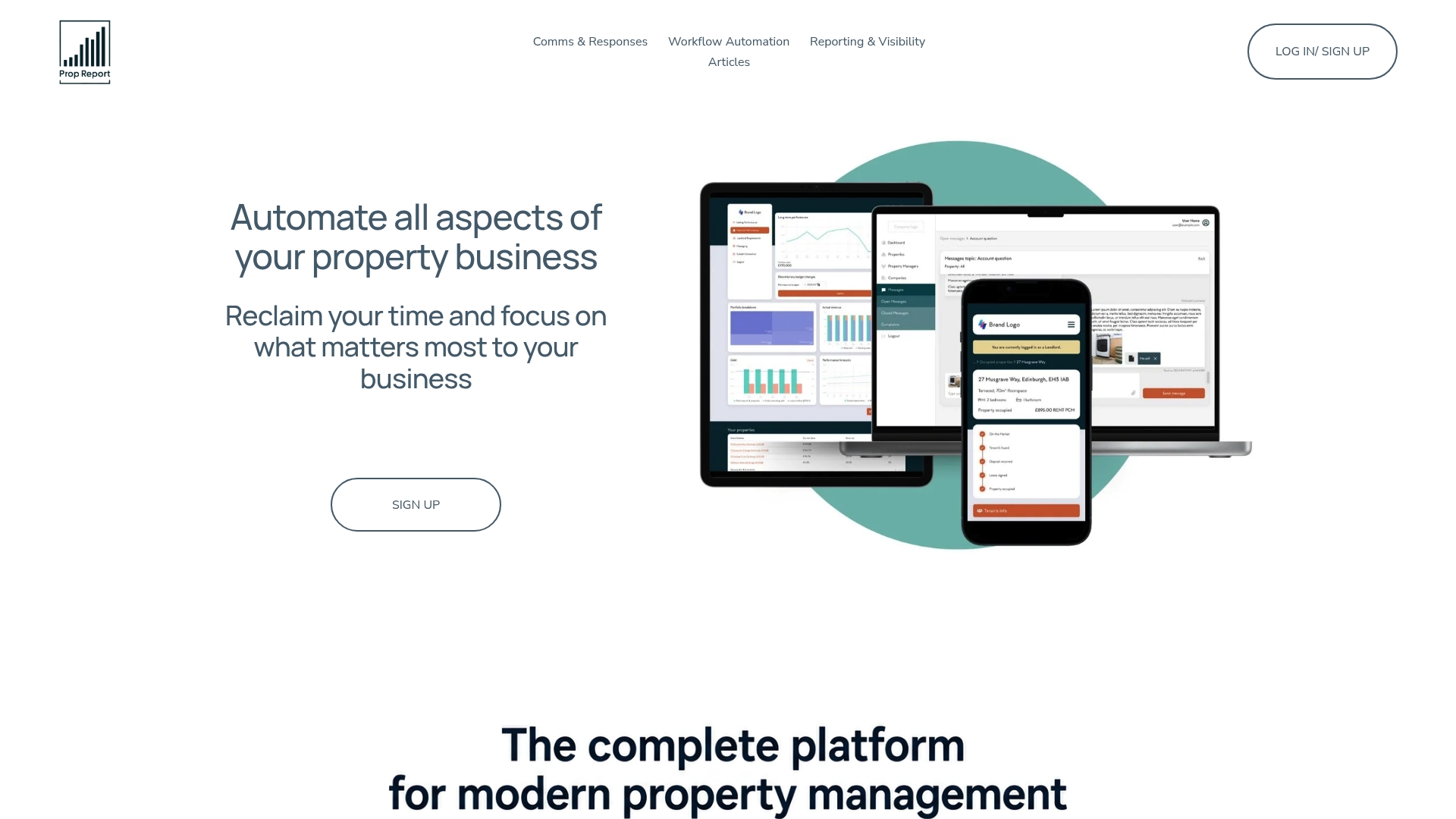
Parsing solves half the problem. The other half is where that data ends up. Prop Report takes parsed tenant, lead and maintenance data and puts it straight into a centralised platform that landlords, agents and owners already use, so nothing gets duplicated into a side spreadsheet nobody maintains.
- Real-time reporting means parsed data appears in owner-facing views without manual updates.
- ISO 27001-certified security practices apply to every integration, with DPAs available for teams that need one in place.
- Existing CRM connections mean parsing feeds your current setup rather than forcing a rebuild.
Plans start at £10 a month on the Individual tier, scaling up to Pro for larger portfolios. Check the pricing page to see which tier fits your portfolio size.
Sources
- ICO guidance: legitimate interests
- The renters' rights act information sheet 2026
- Behind the front door: when property data becomes personal data
FAQ
What does email parsing mean?
Email parsing means automatically reading an email and its attachments, then extracting specific pieces of information such as names, contact details or property references into structured data. That data can then be sent straight into a CRM or property-management system instead of being typed in by hand.
How can I parse an email?
You can parse an email using rule-based templates that match known patterns, or an AI-assisted extractor that handles more varied formats and scanned attachments. Most property teams route enquiries to a dedicated mailbox or forwarding rule, then connect that mailbox to a parser through a webhook, an automation connector or a direct API integration with their existing system.
What are some good email parsing tools?
The right tool depends on email variety. Template-based parsers suit teams receiving mostly standardised portal enquiries, while OCR or AI-assisted extractors are better for handling scanned documents like payslips and IDs, and connectors such as Zapier-style automations are often used to move the parsed output into a CRM or PM system.
Can you provide some examples of real estate emails?
Common examples include portal viewing enquiries with a name, phone number and property reference, referencing agency emails with attached ID and payslip documents, and tenant maintenance reports describing an issue such as a leak or heating fault. Each format tends to follow a predictable structure, which is what makes rule-based parsing effective for them.