

Yes, UK landlords can share tenant data lawfully under UK GDPR, but only when a valid lawful basis exists and proper safeguards are in place. Landlords count as data controllers, so consent is rarely the right tool for routine sharing. Instead, document your reliance on contract, legitimate interests or legal obligation, tell tenants what you're doing, and limit every disclosure to the minimum information a recipient genuinely needs.
TL;DR:
- Sharing tenant data is lawful under UK GDPR when based on contract, legitimate interests, legal obligation, or explicit consent, with proper documentation and safeguards.
- Landlords must conduct a Legitimate Interests Assessment before sharing data based on legitimate interests, and always limit disclosures to necessary information.
- Use written data sharing agreements that specify roles, processing instructions, security measures, breach procedures, and data deletion policies to ensure accountability.
- Conduct DPIAs and implement technical security measures like encryption and role-based access to minimize risks when processing large-scale or sensitive data.
- Most landlords must pay the ICO data protection fee and maintain comprehensive, central records of LIAs, DPIAs, and disclosures, making compliance audits easier and more accurate.
Table of Contents
- GDPR data sharing for landlords: when the rules apply
- Lawful bases for secure data sharing with landlords, and where consent falls short
- Practical pre-share checklist every time you disclose tenant data
- Data sharing agreements: the clauses that actually protect you
- DPIAs, security and records: reducing risk before it happens
- ICO registration, fees and what non-compliance actually costs
- Repairs, contractors and referencing: applying the rules in practice
- How documented workflows keep compliance practical, not painful
- Author perspective: practical compliance beats paralysis
- Keep your sharing records audit-ready with Prop Report
- Sources
- FAQ
GDPR data sharing for landlords: when the rules apply
Article 4(7) of UK GDPR defines a "controller" as whoever decides why and how personal data gets processed. As a landlord, that's you, whether you manage one flat or a portfolio of forty. Controller status brings direct accountability: you can't shift blame onto a contractor or letting agent just because they handled the actual disclosure.
Several everyday lettings tasks count as processing under GDPR compliance for landlords:
- Taking and assessing rental applications
- Running referencing and credit checks
- Instructing contractors for repairs
- Operating CCTV at a property
- Messaging tenants by email, text or through a portal
Some arrangements create joint controller relationships (you and a letting agent both deciding how data gets used) or processor relationships (a contractor acting purely on your instructions). Getting this distinction wrong matters because processors have far less independent responsibility than joint controllers, and your contracts need to reflect which one applies.
Lawful bases for secure data sharing with landlords, and where consent falls short
UK GDPR gives you six lawful bases to choose from, but only four turn up regularly in lettings: contract, legitimate interests, legal obligation and consent. Picking the right one, and writing down why, is the backbone of landlord data protection UK practice.
- Contract covers anything necessary to deliver the tenancy, arranging a repair, confirming rent payment, or passing property details to a contractor doing agreed maintenance.
- Legitimate interests typically fits referencing checks, fraud prevention or sharing limited information with a managing agent, provided the tenant's rights don't outweigh your interest.
- Legal obligation applies when you're required by law to disclose data, such as certain local authority licensing requests.
- Consent should be your last resort. The ICO advises that landlords should often rely on contract or legitimate interests rather than consent for routine operational sharing, because consent can be withdrawn at any moment, leaving essential processes exposed.
To rely on legitimate interests properly, run a Legitimate Interests Assessment (LIA): identify the purpose, confirm the processing is necessary, and weigh it against the tenant's expectations and rights. Keep this written, even a one-page note, because it's your evidence if the ICO ever asks why you shared what you shared.
Pro Tip: Write your LIA before you share the data, not after a complaint lands. Retrofitted justifications rarely hold up and always look worse to a regulator than a contemporaneous note.
Practical pre-share checklist every time you disclose tenant data
Before any disclosure, whether to a contractor, an agency or a local authority, run through this sequence. It takes minutes and it's the difference between defensible practice and guesswork.
- Confirm and record the lawful basis you're relying on; if it's a legal obligation, cite the specific power
- Apply data minimisation: send only the fields the recipient actually needs, and redact the rest
- Check the recipient's role (processor or separate controller) and have a written contract or processor terms signed
- Notify the tenant, via your tenancy privacy notice or a direct message, if the sharing falls outside what they'd reasonably expect
- Log the disclosure: who received it, what was sent, why, and how long it will be kept
The ICO's data sharing checklist sets out this exact discipline: document the decision, use a data sharing agreement, run a DPIA where risk is elevated, and review the arrangement periodically. Regular review matters more than most landlords assume, a contractor arrangement that was proportionate last year might not be once you've added five more properties to the same feed.
Data sharing agreements: the clauses that actually protect you
A written agreement is one of the clearest ways to demonstrate accountability if a tenant or the ICO ever questions how their data moved. It also forces clarity on who's the controller and who's the processor, which matters because the controller carries the legal weight if something goes wrong.
A workable agreement, even a short one, should cover:
- Clear statement of controller and processor roles
- Specific processing instructions (what data, for what purpose, for how long)
- Security obligations the recipient must meet
- Rules on using sub-processors, if any
- Breach notification timings
- Deletion or return of data once the purpose ends
- Audit rights so you can check compliance
The ICO publishes data sharing agreement guidance with a template structure that's genuinely usable by a small landlord, not just a corporate compliance team. Naming parties, lawful bases, permitted fields and retention limits in plain terms is enough for most residential lettings scenarios.
DPIAs, security and records: reducing risk before it happens
A Data Protection Impact Assessment (DPIA) becomes necessary when sharing is likely to result in high risk, large-scale referencing feeds, CCTV covering communal areas, or any new system handling sensitive categories of data. A DPIA should map the data flow, assess necessity, and identify mitigations before you go live.

On the technical side, secure portals, role-based access controls and encryption in transit and at rest are the baseline expectations for contractor transfers. Pair that with a retention schedule and a running sharing log, and you've built the audit trail the ICO expects to see if it ever asks how a specific disclosure was justified.
ICO registration, fees and what non-compliance actually costs
Most landlords who process tenant data electronically, tenancy agreements, referencing records, maintenance logs, must pay the ICO's data protection fee. An exemption exists where a letting agent fully manages the property under the accounts and records exemption, but if you handle any processing yourself, you're likely liable.
Skipping registration risks a monetary penalty on top of whatever enforcement follows a complaint. Typical ICO action in this sector tends to focus on improper disclosure of contact details to third parties without a lawful basis, exactly the kind of ad hoc sharing that a documented process would have prevented.
Repairs, contractors and referencing: applying the rules in practice
Theory is easy. Here's how it plays out on an actual repair job.
- Repairs and maintenance: act as the intermediary wherever possible. Arrange the appointment yourself and pass the contractor only the time slot and property address; withhold the tenant's phone number unless they've agreed to be contacted directly.
- Contractors generally: insist on processor terms before handing over any tenant information, and avoid giving contractors standing access to full contact lists. Sector guidance from Boydens flags disclosing contact details without a proper basis as one of the most frequent compliance failures landlords make.
- Referencing and Rental Exchange schemes: legitimate interests can justify sharing rent payment data with credit reference agencies, but tenants must be told in advance and given a way to object. Experian's Rental Exchange guidance confirms this works in practice precisely because transparency sits at the centre of the process.
How documented workflows keep compliance practical, not painful
The hardest part of GDPR obligations for property owners isn't understanding the law, it's keeping LIAs, DPIAs, sharing logs and processor agreements in one place you can actually find again. Centralising those records means faster answers when a tenant exercises a rights request, and a single audit trail if the ICO ever comes asking.
Platforms built around documented, centralised workflows reduce that admin load directly: onboarding a new contractor becomes a case of applying existing processor terms rather than drafting from scratch each time. Security practices aligned with standards like ISO 27001 also support the "appropriate technical and organisational measures" the ICO expects to see behind any sharing decision.

Author perspective: practical compliance beats paralysis
Too many landlords treat GDPR as a reason to refuse every request for information, which helps nobody and isn't actually what the law asks for. The ICO frames its own guidance as an enabler of responsible sharing, not a wall against it. Share securely, share transparently, and write down why you did it.
Where arrangements get genuinely complicated, joint controller setups with agents, or high-risk sharing involving sensitive data, get proper advice rather than guessing. For everything else, the ICO's own published guidance remains the most reliable primary source you'll find.
— James
Keep your sharing records audit-ready with Prop Report
Propreport is the alternative to juggling spreadsheets, email threads and sticky notes for every LIA, DPIA and processor agreement you're supposed to be tracking. Where most landlords rebuild their compliance paperwork from scratch each time a new contractor comes on board, Propreport centralises those records so processor terms, sharing logs and privacy notices sit in one auditable place, backed by ISO 27001-aligned security practices.
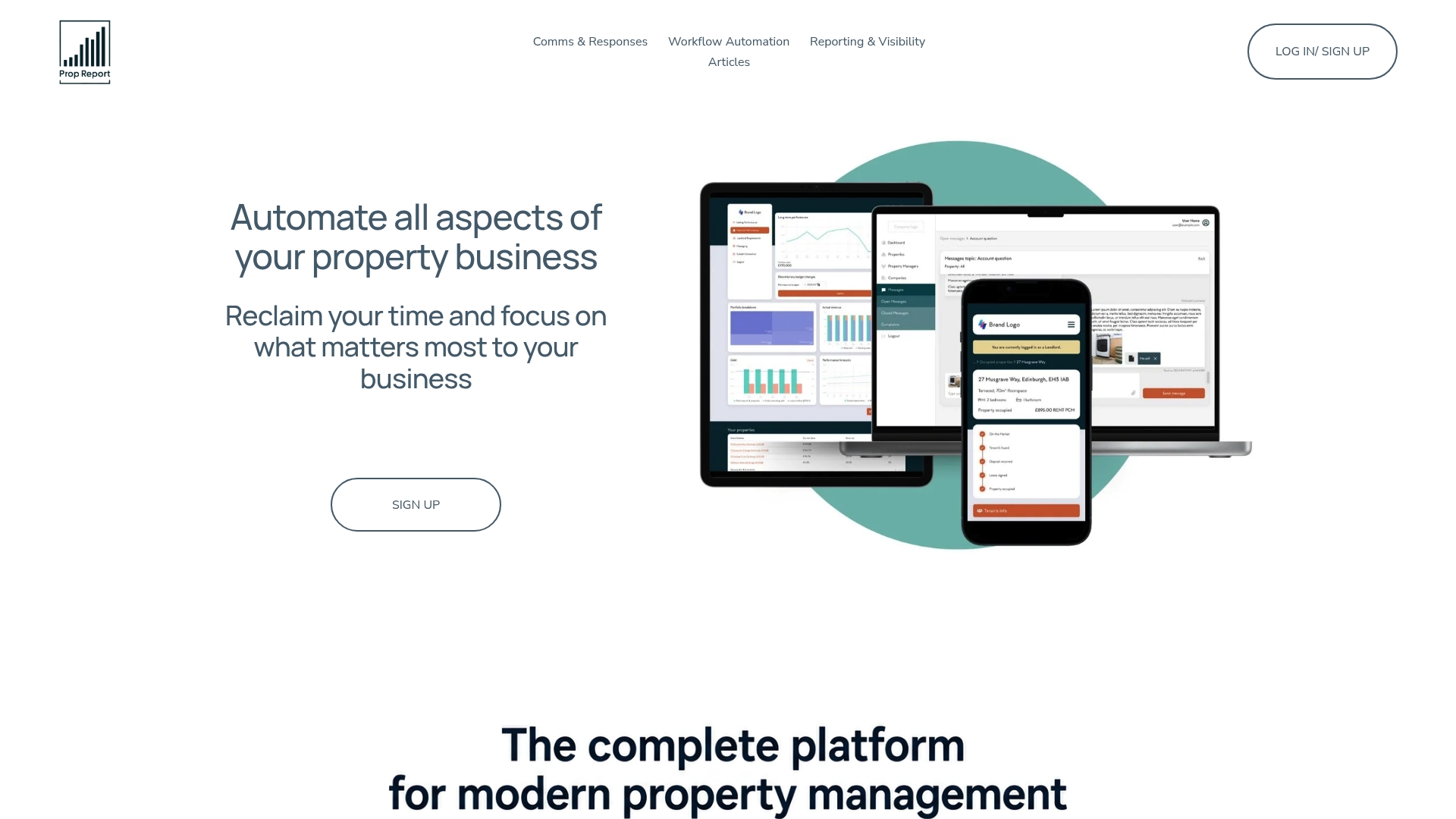
That matters most in the moment you don't expect: a subject access request, a breach scare, or an ICO enquiry, when being able to produce a complete sharing history in minutes rather than days changes the outcome. Plans start with Individual at £10 a month, scaling up through Starter, Growth, Scale and Pro as your portfolio grows. If you're managing tenant data across multiple properties and want that documentation handled properly, take a look at the landlord features and see which plan fits your portfolio.
Sources
- Legitimate interests | ICO
- Annex A: data sharing checklist | ICO
- Landlords’ data protection obligations when sharing tenant details for maintenance | Boydens
This article is general information, not a substitute for advice from a qualified lawyer. Consult a qualified legal professional about your own circumstances before acting on anything here.
FAQ
Does GDPR apply to landlords?
Yes. Any landlord who processes tenant data, tenancy agreements, referencing checks, maintenance records, is a data controller under UK GDPR and must have a lawful basis for each type of processing.
Can my personal data be shared without permission?
A landlord can share tenant data without asking for consent when another lawful basis applies, most often contract or legitimate interests. The ICO advises against defaulting to consent for routine sharing precisely because it's fragile and can be withdrawn at any time.
Do landlords need to register for GDPR?
Most landlords who process tenant data electronically must pay the ICO's data protection fee, unless a letting agent fully manages the property under the accounts and records exemption.
Does GDPR apply to the United Kingdom?
Yes, the UK operates its own version, UK GDPR, alongside national data protection laws, following the country's departure from the EU. The rules mirror the EU regulation closely, and the ICO is the enforcing authority for landlords and every other UK data controller.