

Yes, you need to renew: HMO licences last a maximum of five years and you must apply before the expiry date, not after. Council reminders are a courtesy, never a legal safeguard, so the responsibility sits with you. Check the expiry date on your current licence today and open your council's renewal portal to confirm what it needs from you.
TL;DR:
- Most councils expect renewal applications at least two months before the expiry date, with processing times ranging from six to sixteen weeks.
- Missing the renewal deadline typically results in a new application with full fees and the risk of operating without a license or facing penalties.
- Gathering updated gas safety, electrical reports, fire risk assessments, and correct floor plans before applying can prevent delays caused by missing paperwork.
- Automating record management through platforms like Prop Report helps prevent expiry oversight by tracking documents and reminders automatically.
Table of Contents
- Documents you need before you start your HMO licence renewal
- When to apply and how long councils actually take
- What happens if you miss the renewal deadline
- What HMO licence renewal actually costs
- How councils assess your renewal application
- Your two-month HMO licence renewal checklist
- Why missed renewals are usually a records problem, not a compliance one
- The renewal mistake almost every landlord makes once
- How Prop Report keeps your renewal dates from slipping through the cracks
- Official pages to check before you renew
- Sources
- FAQ
Documents you need before you start your HMO licence renewal
Most delays in the HMO renewal process come from missing paperwork, not policy problems. Gather these before you touch the application form.
- Gas safety certificate (if gas is supplied) and a current Electrical Installation Condition Report (EICR) — book these early, since qualified engineers often have multi-week waiting lists.
- Energy Performance Certificate (EPC) showing your property meets the minimum rating.
- A written fire risk assessment, ideally dated within the last twelve months.
- Updated floor plans showing room dimensions, plus evidence that any works required by your previous licence have actually been completed.
- Signed declarations confirming no material changes to the property, and confirmation that you and your managers still pass the fit and proper person checks.
- Payment of the Part A fee, which is what makes your application officially "duly made" in the council's eyes.
Pro Tip: Order your gas safety and electrical tests the same week you start the renewal, not after the paperwork is otherwise ready. Test bookings, not form filling, are what push landlords past their deadline.
When to apply and how long councils actually take
Apply a reasonable time before your licence expires, such as a couple of months, but check your local authority's guidance for exact timing. Some councils open their renewal window earlier, and a few operate stricter cutoffs. So check your local authority's guidance rather than assuming a standard timeline applies everywhere.
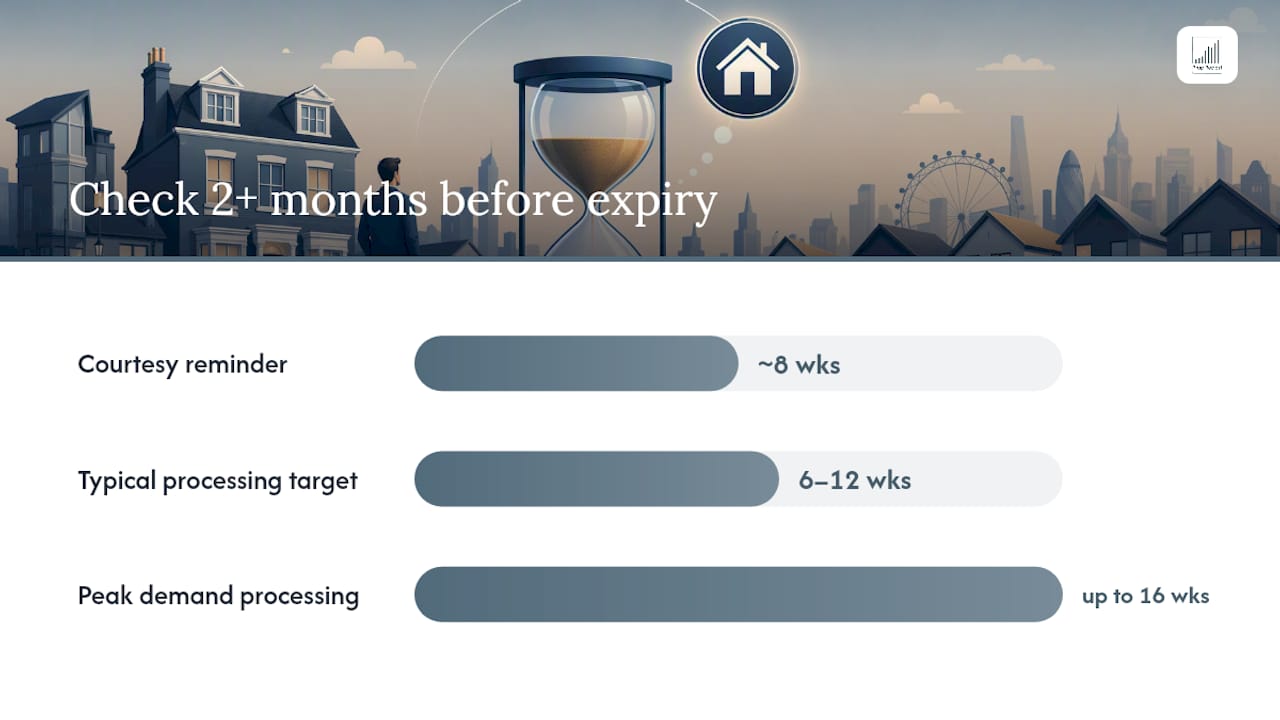
Most councils send a courtesy reminder roughly two months before expiry, but this is a service they choose to offer, not a statutory duty. If a reminder never lands in your inbox, the licence still lapses on schedule.
Processing times vary sharply by council and by how busy their licensing team is:
- Many local authorities target 6 to 12 weeks for a decision.
- Some, including Sheffield City Council, warn that renewals can stretch to 16 weeks during peak demand.
- There is no tacit consent in most areas. Silence past the target date means you follow up, not wait.
What happens if you miss the renewal deadline
Missing the expiry date is one of the costliest mistakes a landlord can make, because most councils will not simply extend your existing licence.
- Your application is treated as new, not a renewal. Most councils reject late submissions outright and require a fresh application with fresh fees.
- You may only get a shortened licence. A handful of councils will accept a late application but grant just a one-year term instead of the usual five, meaning you pay and reapply again far sooner.
- You risk prosecution, Rent Repayment Orders, and civil penalties for operating an unlicensed HMO, even if the gap is brief.
- Act immediately if you've missed it: contact your council's licensing team the same day, and prepare a complete new application with all supporting evidence ready to submit.
What HMO licence renewal actually costs
Fees are rarely a single flat number. Most councils split the HMO renewal fees into two stages, usually labelled Part A and Part B, so budgeting for one payment when two are coming is a common surprise.
- BCP Council charges a total of £1,391.50, split into a £399 Stage 1 fee and a £992.50 Stage 2 fee.
- Bath & North East Somerset lists a total renewal fee of £895.
- Kingston publishes its own separate fee schedule, and it will differ again from both of the above.
Bristol City Council permits a short grace period, allowing renewal up to 28 days after expiry in limited circumstances. That is a local exception, not a national rule, so never assume your council offers the same leeway.
Always check your specific council page, or use GOV.UK's local licence finder, for the exact figure and payment method before you budget.
How councils assess your renewal application
A renewal is not a rubber stamp. Councils run the same core checks they'd apply to a brand-new licence, just against a property they already know.
- Fit and proper person checks are repeated for you and any managers named on the licence.
- Councils frequently consult interested parties, including the fire service, where the property or its use has changed.
- Assessment can include a property visit, followed by either a proposed licence with conditions or a formal notice of reasons for refusal.
- A consultation period follows before the final licence is issued.
- Your application only counts as "duly made" once Part A is paid; the Part B fee is often required before the licence itself is actually issued, and some councils will pause or refuse if Part B goes unpaid.
Your two-month HMO licence renewal checklist
Turn the theory into a schedule. Working backwards from your expiry date keeps every task ahead of its deadline instead of chasing it.
- Week -8: Check the exact expiry date, confirm the licence holder's details haven't changed, and open your council's renewal portal.
- Week -7: Book gas safety and EICR testing appointments now, even if the current certificates aren't due to lapse for weeks.
- Week -6: Commission updated floor plans and gather evidence that any conditions from your last licence have been resolved.
- Week -5 to -3: Scan and consistently name every document (date stamps in filenames help enormously), then load them into a shared folder or your management platform.
- Week -2: Alert your managing agent and, where relevant, your mortgage lender that renewal is underway, and prepare the property for a possible inspection.
- Week -1 to 0: Submit the application, pay the Part A fee, and confirm receipt with the licensing team.
Pro Tip: A single shared folder with a strict naming convention, such as "EICR_2026_RoomA", saves hours when a council officer asks for a document six weeks into processing and you can't remember which version you sent.
Why missed renewals are usually a records problem, not a compliance one
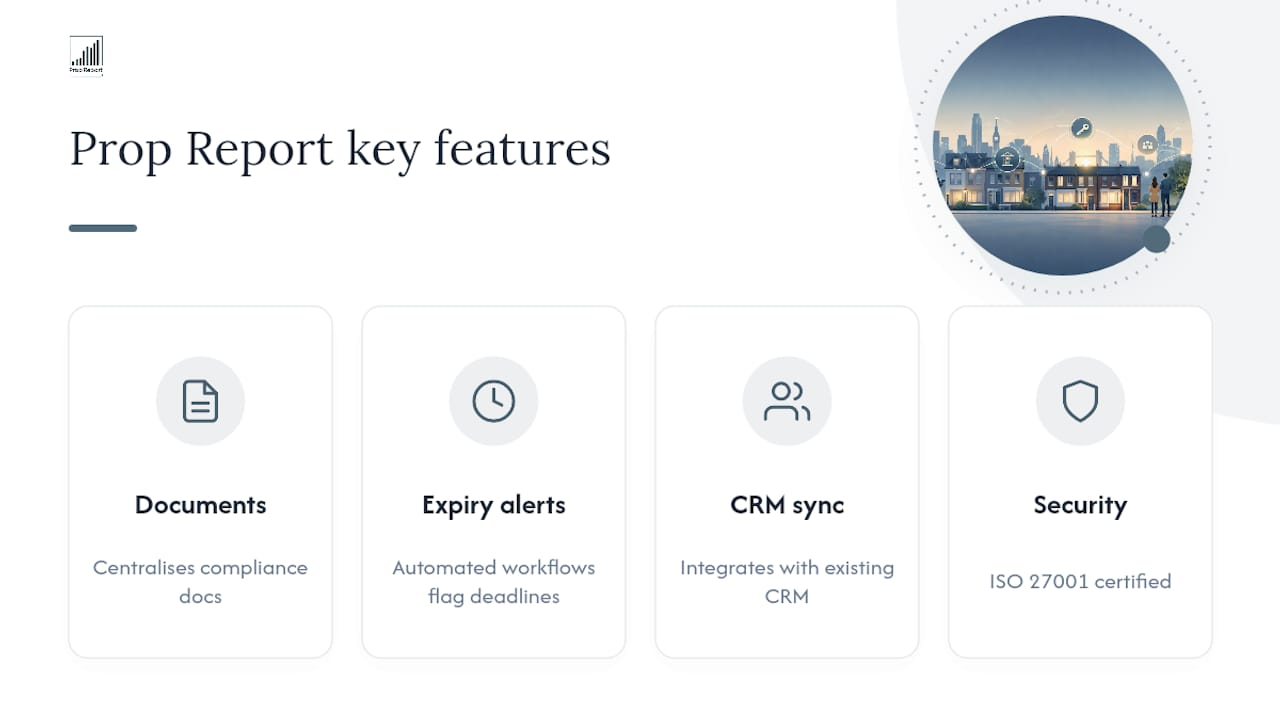
Most licence lapses trace back to scattered records rather than genuine non-compliance. Centralised, automated document storage and reminders close that gap by flagging expiry dates well before the two-month window opens. Prop Report is built around this principle, combining ISO 27001 certified data security with automated reporting and CRM integration so certificates, floor plans and licence dates live in one place instead of across email threads and desktop folders.
The renewal mistake almost every landlord makes once
Landlords rarely fail HMO renewal because of complicated regulations. They fail because they treated a council's courtesy reminder as their real deadline, then discovered the council owed them nothing when it never arrived.
The habit that actually protects you is unglamorous: put the expiry date in a calendar the day the licence is issued, not two months before it lapses, and keep certificates filed centrally rather than scattered across old emails. Teams juggling several HMOs benefit most from automating that discipline, since manual tracking across a growing portfolio is where gaps creep in.
— James
How Prop Report keeps your renewal dates from slipping through the cracks
Propreport is the alternative to chasing certificates across spreadsheets and email inboxes when your HMO licences are approaching renewal. Rather than relying on a council reminder that isn't guaranteed to arrive, Prop Report centralises your compliance documents, tracks expiry dates automatically, and integrates directly with your existing CRM so nothing sits buried in someone else's inbox.
The platform's ISO 27001 certified security means sensitive tenancy and compliance data stays protected while it's shared across your team, and its automated workflows are built to flag upcoming deadlines before they become emergencies. For landlords managing several HMOs, that removes the single biggest cause of missed renewals: paperwork nobody remembered to track.
If your portfolio has grown past the point where a diary reminder feels reliable, view Prop Report's pricing plans to see available options that may fit your number of properties.
Official pages to check before you renew
Local rules and fees vary, so confirm the detail with the source before you submit anything.
- Gov for national rules and the local licence finder.
- Council-specific pages for Bristol, BCP Council, Sheffield City Council, City of York Council, and Lambeth Council for exact fees and forms.
Sources
- House in multiple occupation licence
- Renew an HMO property licence
- Apply for or renew a house in multiple occupation (HMO) licence
- Renew or change your HMO licence | Sheffield City Council
FAQ
How do I renew my HMO licence?
Check your current licence's expiry date, gather updated gas safety, EICR, EPC and fire risk documents, then submit your application through your council's portal along with the Part A fee. Processing typically runs 6 to 12 weeks, so start at least two months before expiry.
How often are HMO licences renewed?
HMO licences last a maximum of five years in England and Wales, so renewal happens on that cycle unless your council issues a shorter term. Landlords who submit a late application are sometimes granted only a one-year licence instead, which forces more frequent renewals.
How much does it cost to renew an HMO licence?
Fees vary by council and are often split into two stages. BCP Council charges £1,391.50 in total, split into a £399 Part A fee and £992.50 Part B fee, while Bath & North East Somerset lists £895. Always confirm the current figure on your own council's page.
How often do you renew your HMO licence in the UK?
The standard cycle is every five years, running from the date your current licence was issued rather than a fixed calendar date. You must apply before that date passes, since councils are not obliged to remind you and most reject late renewals outright.
What happens if my HMO licence expires before I renew it?
Most councils will not accept a late submission as a renewal and will treat it as a brand-new application, sometimes with a shortened licence term. You also risk prosecution, Rent Repayment Orders and civil penalties for operating unlicensed, so contact your council's licensing team the moment you realise the deadline has passed.