

ISO 27001 delivers measurable risk reduction, commercial leverage and operational efficiency once it's implemented properly as a working information security management system (ISMS), not a paperwork exercise. The certification produces value across five main channels:
- Risk management — structured identification and treatment of security threats
- Trust and market access — third-party proof that opens tenders and enterprise deals
- Operational efficiency — standardised processes that cut duplicated work
- Reduced questionnaire burden — fewer hours spent answering procurement security assessments
- Insurance and contractual advantage — certification can shape premiums and contract terms
The sections below quantify each of these and walk through what certification actually involves.
Key Takeaways
ISO 27001 works because it turns security from a defensive cost centre into a commercial asset that speeds procurement, reduces questionnaire friction and lowers incident risk simultaneously.
| Point | Details |
|---|---|
| Five core benefits | Risk reduction, regulatory alignment, market access, operational efficiency and fewer questionnaire delays. |
| Risk reduction is process driven | Identification, assessment, treatment and monitoring form a continuous cycle, not a one-off audit. |
| Commercial payback varies by sector | Enterprise and regulated-sector vendors see faster returns than small, low-pipeline businesses. |
| Certification has ongoing costs | Surveillance audits and continual improvement follow the initial certification, not a single fee. |
| Start smaller if budget is tight | Cyber Essentials or targeted controls can precede full ISO 27001 for very small businesses. |
Table of Contents
- What are the main ISO 27001 benefits?
- How does ISO 27001 actually reduce risk?
- What's the commercial return on ISO 27001?
- What does ISO 27001 certification actually involve?
- How Propreport applies ISO 27001 in practice
- When is ISO 27001 worth prioritising?
- Where to read more on ISO 27001
- Sources
What are the main ISO 27001 benefits?
The certification's benefits fall into recognisable categories, and most organisations feel the commercial ones before the technical ones.
- Risk reduction and resilience — a formal risk assessment process catches weaknesses before they become incidents.
- Regulatory and contractual compliance support — an ISMS maps directly onto data-protection obligations and sector rules.
- Market access and procurement advantage — certification shortens tender cycles because buyers no longer need to interrogate your security posture from scratch.
- Customer trust through third-party validation — an external certification body, not your own marketing copy, vouches for your controls.
- Operational efficiency and cost savings — standardised processes replace the ad hoc security decisions that eat management time.
- Reduced security questionnaire burden and insurance advantages — fewer repeat answers to the same forty-page vendor assessment, and sometimes better terms from insurers.
- Improved staff awareness and governance — training and defined ownership cut the human-error incidents that cause most breaches.
The UK's Cyber Security Breaches Survey continues to track how widespread cyber incidents are among UK organisations, which is precisely the backdrop against which a structured ISMS earns its keep. None of these benefits arrive automatically. They're the output of a system that has to be built, audited, and maintained, which is what the rest of this article covers.
How does ISO 27001 actually reduce risk?
The mechanism is a repeatable cycle, not a one-off audit. An ISMS built to ISO/IEC 27001:2022 forces an organisation to identify its information assets, assess what could go wrong with each one, treat the highest-priority risks, and then monitor whether those treatments are actually working. That loop is what separates certified organisations from ones that simply bought a firewall and hoped.
In practice, this shows up as specific, auditable controls:
- Access logging that shows who touched what data, and when
- Role-based access control so staff only reach the systems their job requires
- Supplier due diligence before a third party gets anywhere near your systems
BSI's implementation guidance notes that this risk-based approach embeds itself across people, process and technology rather than sitting solely with IT. That matters for incident response speed: when logging and access control are already in place, a breach is detected sooner and contained faster, which tends to reduce both the operational damage and the cost of putting things right. Insurers increasingly price cyber cover based on exactly these controls.
Pro Tip: Don't wait for the external audit to test your incident response plan. Run a tabletop exercise with your team six weeks before certification, so gaps surface while you can still fix them cheaply.
What's the commercial return on ISO 27001?
Security benefits only matter to a board if they translate into numbers a finance director recognises. The clearest one is procurement speed: buyers increasingly build security expectations directly into how they award contracts, and UK Procurement Act guidance reflects that shift toward treating information security as a standard evaluation criterion rather than an afterthought.
Certification changes the sales conversation in several concrete ways:
- Enterprise buyers often accept an ISO 27001 certificate in place of a lengthy custom security review, cutting weeks off a sales cycle
- Security questionnaires shrink, because many answers point back to the certificate and its Statement of Applicability rather than needing bespoke justification
- Some insurers and contract counterparties offer more favourable terms once a recognised ISMS is in place
Industry analysis from Bastion reports that certification can unlock market access and materially shorten sales cycles, with vendor studies citing meaningful reductions in questionnaire time. Treat those figures as illustrative rather than guaranteed. The return varies by sector and size: a regulated fintech selling to banks will see a faster payback than a small facilities firm with no enterprise clients, so weigh the investment against who's actually asking for it in your pipeline.
What does ISO 27001 certification actually involve?
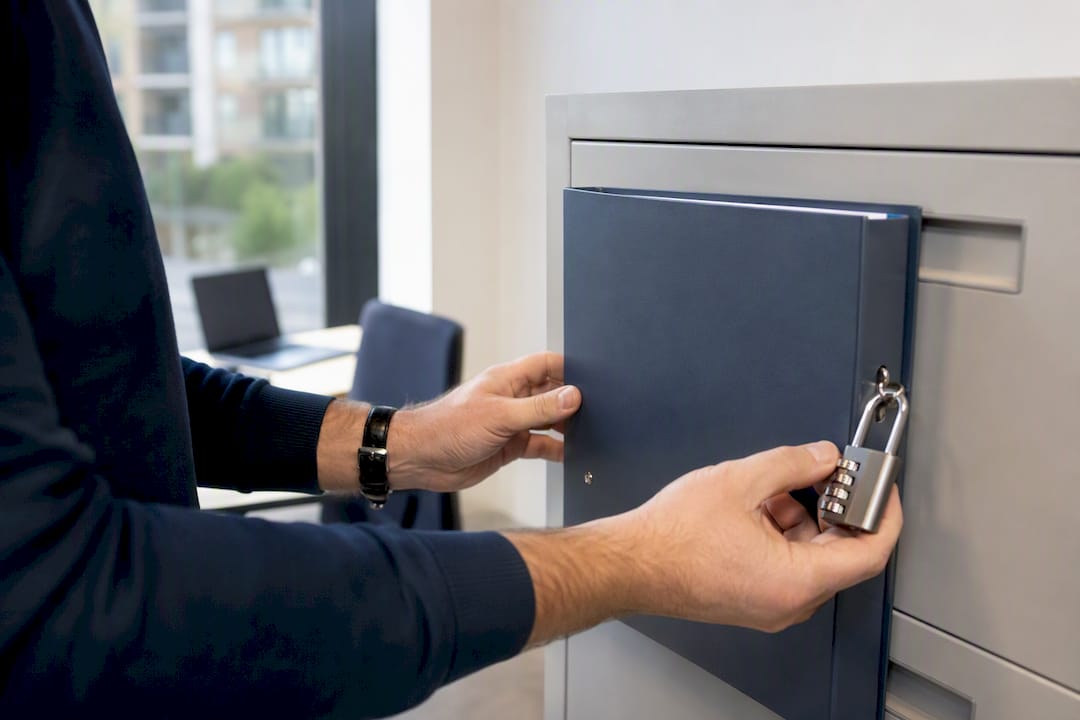
Certification starts with defining scope: which systems, locations, teams and data types the ISMS covers, documented in a Statement of Applicability (SoA) that lists which of the standard's controls apply to you and why. Getting scope wrong is the single most common reason projects overrun their budget, because teams either bite off more than they need or discover mid-project that a system they excluded should have been in scope.
A realistic path looks like this:
- Preparation — gap analysis against the standard, appointing an ISMS owner, agreeing scope and the SoA
- Implementation — building the controls, writing policies, training staff, running the risk assessment
- External audit — a two-stage certification audit by an accredited certification body
- Surveillance and maintenance — annual surveillance audits plus a full recertification cycle, alongside continual improvement as risks change
Budget for internal staff time, possibly external consultancy, and certification body fees, which vary by organisation size and scope complexity. Certification isn't a one-off cost. Surveillance audits and the discipline of continual improvement under ISO/IEC 27001:2022 mean the ISMS has to keep working long after the certificate is framed on the wall.
How Propreport applies ISO 27001 in practice
Propreport holds ISO 27001 certification, which isn't a marketing badge tacked on afterwards. It shapes how the platform actually handles landlord and property manager data day to day.
- Centralised access controls govern who can see financial and tenant data across the platform
- Integrations with CRM and finance systems go through the same due-diligence checks the standard requires of any supplier connection
- Clients get a verifiable answer, backed by a third-party auditor, when their own procurement teams ask how their data is protected
That last point is where certification earns its money most directly. When a property management company's finance team runs a vendor security review, Propreport's ISO 27001 status answers most of the questionnaire before it's even sent, which is the same commercial dynamic covered above, just applied to the property sector specifically.
When is ISO 27001 worth prioritising?
ISO 27001 earns its place at the top of the security roadmap for B2B vendors selling into enterprise or regulated buyers, for anyone in a regulated sector, and for organisations chasing public-sector or enterprise procurement where certification is a threshold requirement rather than a nice-to-have.
For a very small business with a thin budget and no enterprise sales pipeline, start smaller: Cyber Essentials or targeted technical controls deliver faster protection for less outlay, with ISO 27001 as a later step once the commercial case justifies it. Ask the board three questions: who's actually demanding this certification in our sales pipeline, what would a serious breach cost us today, and can we sustain the ongoing audit cycle, not just the first one?
— James
Where to read more on ISO 27001
- ISO/IEC 27001:2022 — the official standard text
- BSI implementation guide — practical build steps
- Cyber security breaches survey 2024 — UK breach data
- Deloitte's business benefits analysis — commercial framing
Sources
- ISO/IEC 27001:2022 - Information security management systems
- ISO 27001 implementation guide (BSI)
- Gov
- 5 Key Benefits of ISO 27001 Certification | Bastion
- The Business Benefits of ISO 27001 Certification | Deloitte