

A landlord portal gives owners and managers a single source of truth for finances, maintenance, documents and communications, cutting reconciliation time and improving owner trust. The core value is consolidation: rent, statements, work orders, and compliance records live in one auditable place instead of scattered spreadsheets and inboxes. Portals like these turn that consolidation into faster reporting, fewer manual errors and stronger owner retention.
TL;DR:
- Real-time ledger updates allow instant reconciliation, reducing the hours spent correcting manual errors and chasing missing invoices each month.
- Consolidated financial reports and export formats streamline tax preparation and minimize delays caused by scattered paper records or inbox attachments.
- Digital rent collection and scheduled owner payouts offer accurate, timestamped records that instantly resolve disputes about payments or late fees.
- Transparent maintenance logs with photos, status updates, and cost breakdowns improve dispute resolution and create reliable property histories.
- A portal’s integration with CRM and accounting systems eliminates double data entry, automates routine tasks, and requires verification during demo or security checks.
Table of Contents
- Financial control and reporting: live ledgers, consolidated statements and tax readiness
- Payments and cashflow: online rent collection and predictable owner payouts
- Maintenance and communications: transparent work orders and their limits
- Document storage, compliance and dispute proof
- Integrations and automation: CRM, accounting and workflow connections
- How to evaluate a landlord portal before you commit
- Prop Report's perspective on what a portal should actually deliver
- Getting started with a Prop Report demo
- Sources
- FAQ
Financial control and reporting: live ledgers, consolidated statements and tax readiness
A live ledger updates the moment a payment clears or an invoice gets paid, giving managers the granularity needed for cashflow analysis and per-unit profitability comparisons without waiting for a monthly close. That immediacy changes how reconciliation actually happens: instead of matching bank statements against spreadsheets at month end, discrepancies surface within hours, while they're still cheap to fix.
Consolidated owner statements pull that same ledger data into a format accountants can export directly, which shortens the gap between "the numbers exist" and "the numbers are usable." Landlord portal guides point to real-time access to financial reports and documents as the feature that most reduces delays and improves transparency between managers and owners.
Statistic Callout: Centralised, automated reporting shortens year-end tax preparation because searchable audit trails and timestamped records replace the usual scramble through paper invoices and inbox attachments.
What this typically saves a manager:
- Hours spent chasing missing invoices before an accountant deadline
- Manual re-entry of figures between property software and spreadsheets
- Owner queries about "where's my statement" during peak season
- Guesswork when comparing profitability across a portfolio
Payments and cashflow: online rent collection and predictable owner payouts
Digital rent collection posts directly to the ledger the instant a payment clears, removing the manual step of matching bank transfers to tenant accounts by hand. That single change eliminates one of the most error-prone tasks in property administration: reconciling who paid what, and when.
Scheduled owner payouts follow the same logic. Once rent is confirmed, distributions can run on a fixed cycle rather than whenever someone finds time to process them, which makes an owner's income far easier to forecast month to month. Every transaction carries a timestamp and status, so if an owner disputes a payment date or a tenant disputes a late fee, the record settles it without a lengthy email trail.
Scenarios this solves in practice:
- A tenant claims they paid on time; the ledger timestamp confirms or contradicts it instantly
- An owner asks why a payout was a day late; the status log shows exactly where it sat
- A manager needs last quarter's cashflow for a lender; the export is already formatted
Maintenance and communications: transparent work orders and their limits
A useful maintenance feed logs the job description, photos of the issue, contractor status updates and final cost, all attached to the property record rather than buried in a text thread. That history becomes evidence when a tenant disputes a repair timeline or an owner questions a contractor's invoice.
Here's what a solid maintenance and communications setup should include:
- Photo evidence attached to every logged issue, before and after
- A status field that updates automatically as a job moves from reported to resolved
- Cost breakdowns tied to each work order, exportable for owner statements
- A searchable history by property, not just by date
The distinction that trips up a lot of managers is treating the portal as the whole communication strategy. An owner portal is fundamentally a pull system: the owner has to log in and go looking. Nothing forces them to check it when a boiler gets fixed or rent arrives late.
Pro Tip: Pair the portal with automated push notifications, email or SMS, for milestones the owner shouldn't have to hunt for: maintenance completions, rent arrears, or a lease renewal date approaching. Ask any vendor during a demo how their notification triggers work, not just how their dashboard looks.
Document storage, compliance and dispute proof
A central document vault earns its keep when a dispute lands or a tax return is due. Leases, insurance certificates, contractor invoices and inspection photos all need to sit in one searchable place, timestamped, so nobody is digging through email archives under deadline pressure.
Version control matters as much as storage. Read-only access for owners, paired with export permissions for accountants, keeps records tidy without letting anyone accidentally overwrite an inspection report. Centralised document storage that keeps photos, logs and invoices timestamped together consistently improves outcomes when disputes go to adjudication.
Statistic Callout: Recognised security frameworks matter here too. ISO 27001 certification, which Prop Report holds, signals that a platform's data-handling and encryption practices have been independently assessed rather than self-declared.
What belongs in the vault:
- Signed leases and renewal amendments
- Insurance certificates and safety certificates
- Contractor invoices and warranty documents
- Time-stamped inspection photos
Integrations and automation: CRM, accounting and workflow connections
Integrations remove the single biggest time sink in property administration: double entry. When a portal connects properly to a CRM and an accounting system, a new tenant record or a paid invoice only needs to be entered once, and it propagates everywhere it's needed. Practical guides to CRM integration with property portals describe exactly this reduction in duplicated admin work as the main payoff.
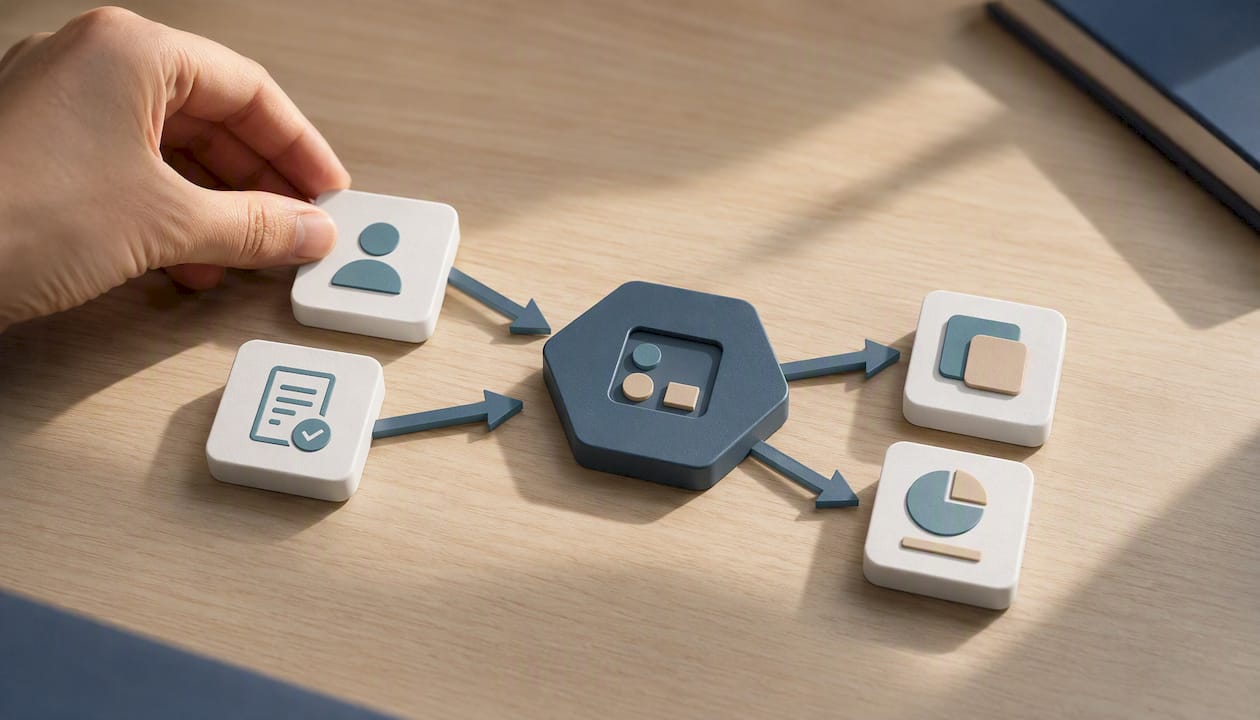
Automation compounds that saving. Statement generation that runs on a schedule, reminder flows for arrears or renewals, and task assignment for maintenance jobs all happen without a manager triggering them manually.
Useful integrations to check for:
- Bank feed connections that post transactions automatically
- Accounting software sync, so books close without re-keying figures
- CRM links that keep tenant and owner records consistent across systems
During a demo, ask to see one integration actually move live data, not just a slide describing it.
How to evaluate a landlord portal before you commit
Vendor evaluation goes faster with a fixed checklist rather than an open-ended tour of features. Best practice guides for portal management consistently point to the same core set: access levels, real-time reporting, maintenance tracking and document storage as the baseline, with regular measurement of engagement and response times layered on top.
- Ask to see the live ledger update in real time during a test payment
- Request a sample consolidated statement export in the format your accountant uses
- Walk through the payment flow from tenant payment to owner payout
- Check the audit trail on a document, including who accessed it and when
- Confirm which CRM and accounting systems it integrates with natively
- Ask for the security certificate, ISO 27001 or equivalent, and how data is encrypted
Red flags include vague answers about integration "roadmaps," no visible audit trail, or a sales team that can't demonstrate the ledger updating live.
| What to check | Why it matters |
|---|---|
| Live ledger behaviour | Confirms real-time accuracy, not batch updates |
| Export formats | Determines accountant and tax-season friction |
| Integration list | Shows how much double entry you'll still do |
| Security certification | Independent proof of data-handling standards |
| Notification triggers | Separates a passive portal from active communication |
A rough ROI estimate: multiply the hours currently spent on manual reconciliation and statement prep per month by the manager's hourly cost, then compare that against the subscription fee. Most managers underestimate this figure until they actually time themselves for a week.
Prop Report's perspective on what a portal should actually deliver
The case for a landlord portal isn't theoretical. Prop Report was built around a specific, measurable problem: property managers losing time to fragmented reporting, disconnected systems and manual data entry, inefficiencies that can add up to over £45,000 a year per manager in wasted hours and missed decisions. That number is what happens when finance, maintenance and communication all live in separate places instead of one.
Prop Report's live ledger and integration capabilities address the same gaps this article has walked through, real-time reporting, CRM and accounting connections, and ISO 27001 certified data security. The platform maps directly onto what a demo checklist should test for. What's still needed is more published case data: real client outcomes and portfolio-level performance figures that let prospective users benchmark savings before they commit.
— James
Getting started with a Prop Report demo
If the checklist above raised more questions than it answered, the fastest way to get real ones is to see the ledger and integrations working on live data rather than a slide deck. Prop Report's demo walks through exactly that: the live ledger updating in real time, a look at how CRM and accounting connections actually sync, and a plain-English breakdown of what ISO 27001 certification covers for your tenant and owner data.
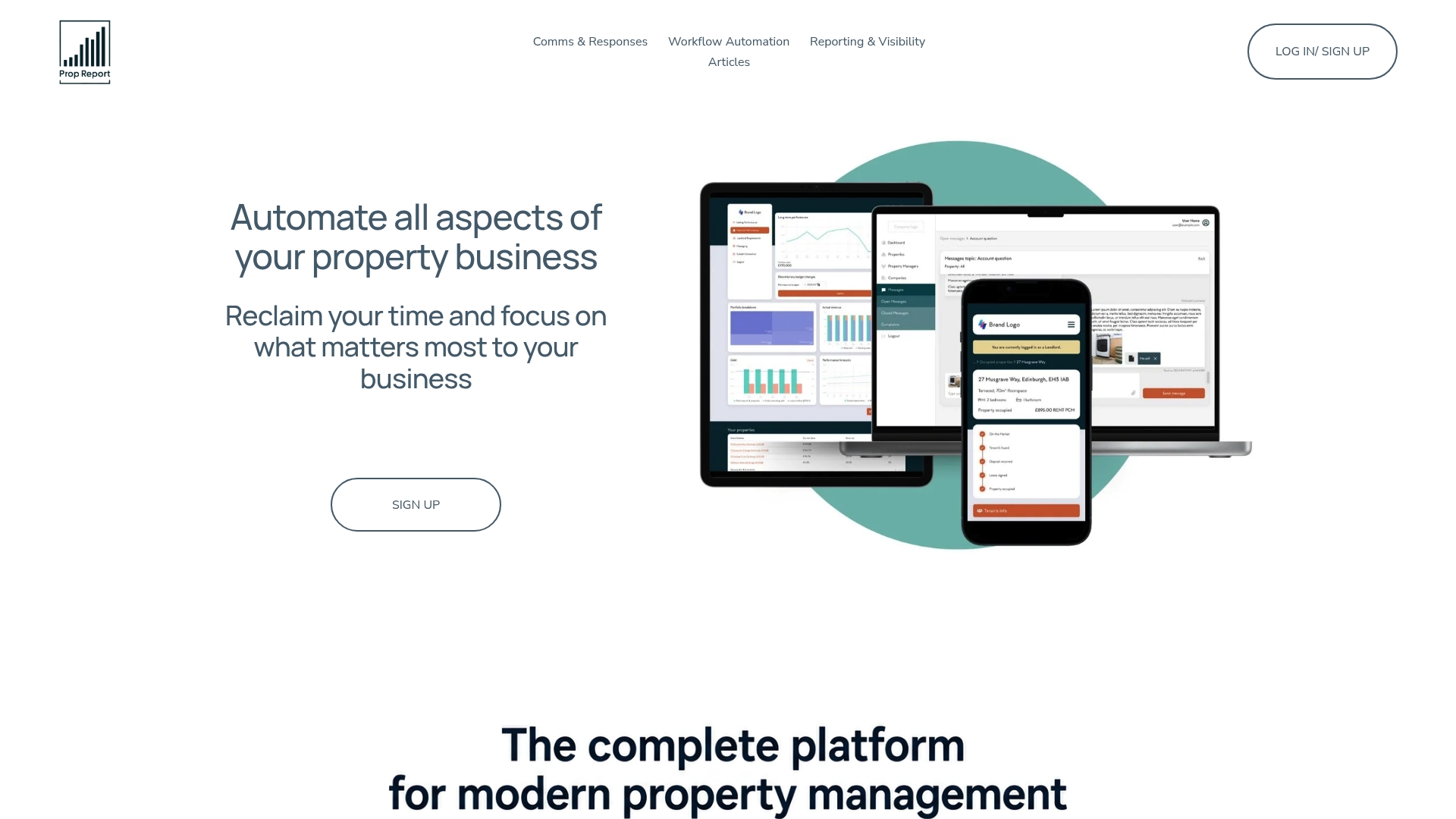
Rather than trialling three separate platforms against a checklist, book one walkthrough and run the same test payment, export and integration check described above. See how Prop Report's reporting and automation handle a real property file, then decide whether it earns a place in your stack. Start with a demo of the landlord-facing features to see the owner portal side specifically.
Sources
For readers who want the underlying research behind these points, three sources cover the ground in more depth: a broad overview of landlord portal features and benefits, a sharper look at why portals need active communication layered on top, and a practical best-practices guide for portal managers covering access levels and engagement metrics.
- The Ultimate Guide to Landlord Portals for Property Owners in 2026
- Owner portals vs owner communication | SendSquared
- Best practices for experienced managers of owner portals
FAQ
What is the main benefit of a landlord portal?
The main benefit is consolidation: finances, maintenance history, documents and communications sit in one auditable place, which cuts reconciliation time and reduces disputes.
Does a landlord portal replace the need to communicate with owners?
No. A portal is a pull system that owners have to log into, so it works best paired with push notifications like email or SMS for milestones such as maintenance completions or rent arrears.
What security certification should I look for in a landlord portal?
ISO 27001 certification is a recognised signal that a platform's data-handling and encryption practices have been independently assessed rather than self-declared; Prop Report holds this certification.
How long does it take to see time savings from a landlord portal?
Most managers notice reduced reconciliation time within the first billing cycle, since live ledgers remove the manual matching of bank transfers to tenant accounts immediately.
What should I test during a landlord portal demo?
Ask to see the live ledger update on a test payment, request a sample statement export, and confirm which CRM and accounting systems it integrates with natively before committing.