

Vendor due diligence for SaaS is the structured process of verifying a provider's security, financial stability, data handling and contractual terms before you sign. The single immediate action: request the vendor's most recent SOC 2 Type II report and a signed data processing agreement, then tier the vendor by data sensitivity before deciding how much further scrutiny is needed. A security or procurement lead should own this from first request to final sign-off.
TL;DR:
- Critical vendors handling sensitive data or essential operations require full assessments, including SOC 2 Type II, ISO 27001, pen tests, and documented exit guarantees.
- Tiering vendors into critical, important, or routine categories helps allocate appropriate diligence efforts based on data sensitivity and operational dependence.
- Missing or outdated security certifications, untested data exports, vague liability clauses, and undisclosed subprocessors are red flags that demand thorough review or contract amendments.
- Conducting diligence within predefined timelines—hours for routine, days for important, weeks for critical vendors—ensures efficiency and prevents overlooked risks.
- Implementing continuous monitoring, like annual SOC 2 updates and quarterly subprocessor checks, maintains vendor compliance and minimizes security surprises over time.
Table of Contents
- What does SaaS vendor due diligence actually cover?
- The practical SaaS vendor due diligence checklist
- How do you tier vendors for proportionate due diligence?
- Red flags, escalation paths and a simple decision matrix
- How much time and who should run the review?
- Tools, templates and what to ask vendors
- How do experienced teams actually run this under time pressure?
- What continuous monitoring should look like after sign-off
- What do real vendor due diligence outcomes look like?
- What actually separates a good diligence process from a checkbox exercise?
- Reduce vendor sprawl with an integrated property platform
- Sources
What does SaaS vendor due diligence actually cover?
Vendor due diligence for SaaS systematically evaluates a provider's financial, operational and security posture so buyers can quantify risk before a contract exists rather than discover it after go-live. That evaluation splits into six domains, and skipping any one of them tends to surface as a support ticket, a breach notification, or a renewal dispute six months later.
Company viability comes first, because a brilliant product from a vendor that runs out of runway in eight months is not a solution, it is a migration project waiting to happen. Ask about funding stage, customer concentration, and how long the business could operate without new sales.
Security posture is where most buyers focus, and rightly so. SOC 2 Type II, ISO 27001 and a recent penetration test summary are the baseline evidence set any vendor handling business data should produce without hesitation.
Data handling and residency determines what happens to your records once they leave your systems: encryption standards, backup frequency, which subprocessors touch the data, and whether export is even possible in a usable format.
SLA and support terms tell you what recourse exists when things break: uptime percentage, priority-one response times, and whether credits are automatic or require a fight.
Integration and API maturity affects how much custom glue code your engineering team will maintain forever. Contractual protections close the loop: the DPA, data portability guarantees, liability caps and termination notice periods all need to exist in writing before the first invoice, not after.
The practical SaaS vendor due diligence checklist
This is the working checklist. Copy it into your procurement workflow and adapt the depth to the vendor tier (more on tiering below).
Company information and viability
- Company registration details, headquarters, and ownership structure
- Funding history or profitability status, and runway if disclosed
- Customer concentration (does losing one client sink the business?)
- Existing customer references, cross-checked against independent sources rather than vendor-curated lists alone
- Insurance coverage, particularly cyber liability
Pro Tip: Vendor-supplied references are almost always the happiest three customers on the books. Supplement them with a quick search on LinkedIn, an industry Slack community, or a peer group, because vendor-curated references rarely surface the friction points that matter most once you're locked in.
Security evidence to request
- A current SOC 2 Type II report, checking the audit period, not just the badge on the website
- ISO 27001 certificate and scope statement, confirming which systems and locations it actually covers
- A penetration test summary from within the last 12 months, ideally with remediation evidence for anything flagged
- Incident history and breach notification process, including timelines they commit to in writing
- Access control policy, particularly around employee offboarding and privileged access
The presence of a SOC 2 report tells you almost nothing on its own. The scope and any noted exceptions are what matter: a report that excludes the specific product module you'll be using is far weaker evidence than it first appears.
Data handling checklist
- Data residency: which countries store and process your data, and whether that changes for subprocessors
- Encryption standards, at rest and in transit
- Backup frequency and disaster recovery testing cadence
- Export format and whether a full data export has ever actually been tested by an existing customer
- Retention and deletion timelines once a contract ends
Export capability is the most commonly underestimated cost driver in the entire relationship. A vendor might promise clean exports, but until you've pulled a sample file during a pilot, that promise is theoretical.
SLA, support and integration checks
- Uptime commitment and how it's measured (calendar month versus rolling 30 days matters)
- Priority-one response time, and whether credits are automatic or require a support ticket dispute
- API documentation quality: is it current, versioned, and does it include rate limits?
- Webhook or integration support for your existing CRM and finance stack
- A written roadmap for deprecating old API versions, so you're not blindsided by a breaking change
Contract and exit terms
- Pricing structure, including any usage-based charges that could balloon unexpectedly
- Data processing agreement, signed and current, not a template awaiting signature
- Data portability and exit guarantees: what format, what timeline, what cost
- Liability caps and indemnification clauses
- Termination notice period and any auto-renewal traps
Cloud-native diligence frameworks now treat financial viability, data residency and exit guarantees as inseparable from security posture, and that's the right instinct. A vendor can have flawless encryption and still leave you stranded if the exit clause is vague.
Operational readiness
Confirm implementation timeline, assigned onboarding contact, training resources, and whether a pilot or sandbox environment is available before full rollout. A vendor unwilling to offer any sandbox access is itself worth noting.
How do you tier vendors for proportionate due diligence?
Not every vendor deserves the same scrutiny, and treating a £50-a-month scheduling tool the same as your core property management platform wastes time you don't have. A tiered programme, where critical vendors get the deepest checks and low-risk suppliers get a lighter review, is the only sustainable approach for teams evaluating more than a handful of tools a year.
Critical tier applies to vendors touching sensitive personal data, holding financial records, or sitting in a path where an outage stops your core operations. These get the full checklist: SOC 2 Type II, ISO 27001 scope review, pen test summary, signed DPA, and documented exit guarantees, no exceptions.
Important tier covers vendors with moderate data access or partial operational dependency, such as a communications tool or a reporting dashboard. Require SOC 2 or equivalent, a DPA, and SLA terms, but a full pen test review may be unnecessary if the vendor's own summary is recent and credible.
Routine tier fits low-risk utilities: internal scheduling, non-sensitive analytics, single-user tools. A lighter pass covering basic security assurances and a standard contract review is usually sufficient.
A simple threshold question decides escalation: does this vendor touch personal data, financial records, or a system you cannot operate without for more than a day? One "yes" moves it up a tier immediately.
- Critical: full checklist, security team sign-off required
- Important: core checklist minus deep technical audit
- Routine: contract and basic security review only
Mid-market teams typically complete lower-value reviews in two to three business days, reserving weeks-long diligence for enterprise-scale or acquisition-level commitments.
Red flags, escalation paths and a simple decision matrix
Some findings should stop a deal cold. Others just need a firmer contract. Knowing which is which saves you from either over-reacting to a minor gap or waving through a genuine risk because the sales rep was persuasive.
- No SOC 2 or ISO 27001, and no credible explanation (early-stage startup with a remediation plan is different from an established vendor with nothing) → reject or require a compensating security addendum with audit rights
- Vendor refuses to provide a DPA or insists on their own unmodified template → require contract changes before proceeding; this is non-negotiable for any data-handling vendor
- No documented data export process, or export has never been tested by a real customer → conditional approval only, with a pilot export test as a contract condition
- Vague or unlimited liability language favouring the vendor → require contract changes; this is a common negotiation point, not a dealbreaker on its own
- High customer concentration or funding uncertainty → conditional approval with active monitoring and a documented contingency plan
- Subprocessor list undisclosed or incomplete → escalate to legal review before signature
Tiered scorecards paired with a short deal-breaker list are what separate teams who catch problems early from teams who inherit them post-signature.
Pro Tip: Keep your red-flag list to five or six items maximum. A 40-point red-flag checklist gets skimmed, not read, and the vendor with the actual problem slips through because reviewers have gone numb by item 27.
How much time and who should run the review?
Resourcing depends entirely on contract value and data sensitivity, and pretending otherwise is how teams either burn a week on a £200/month tool or rubber-stamp a critical system in an afternoon.
The review team should include a procurement or commercial lead (contract terms, pricing), a security reviewer (certifications, pen test, architecture), and someone from the business function that will actually use the tool day to day. For critical-tier vendors, legal review of the DPA and liability clauses is not optional.
Timelines vary by depth:
- Light diligence (routine tier): a few hours to half a day, mostly document review
- Standard diligence (important tier): two to three business days, matching the typical turnaround for mid-market purchases
- Deep diligence (critical tier or enterprise scale): four to six weeks, particularly where technical architecture review or legal negotiation is involved
Pilots and reference calls shorten cycles considerably when structured well: a two-week sandbox trial with a specific export test built in answers more real questions than a week of document exchange.
Tools, templates and what to ask vendors
You don't need to build every request from scratch. The CAIQ (Consensus Assessments Initiative Questionnaire) and the SIG (Standardised Information Gathering) questionnaire, both widely used in third-party risk assessment, give you a structured baseline that most established SaaS vendors have already completed for other customers, which speeds up the exchange considerably.
A minimal evidence request template should ask for: SOC 2 Type II report (with audit period), ISO 27001 certificate and scope, pen test summary, signed DPA, sample data export file, and SLA documentation with credit terms.
For non-auditors verifying certifications, this quick check works:
| Check | What to look for |
|---|---|
| SOC 2 Type II | Audit period covers the last 12 months, not a lapsed report |
| ISO 27001 scope | Certificate scope includes the actual product and data centre in use |
| Pen test date | Within the last 12 months, with remediation notes for critical findings |
| DPA status | Signed, not a blank template awaiting negotiation |
- CAIQ and SIG reduce duplicate questionnaire work across vendors
- A dated pen test with no remediation evidence is a partial answer, not a clean one
- Scope statements matter more than certificate logos
How do experienced teams actually run this under time pressure?
Teams that do this well don't skip steps, they tier aggressively and pilot instead of interrogate. A two-week sandbox with a real data export test answers more than three weeks of email exchanges ever will.
The pragmatic shortcut is requesting focused excerpts rather than entire audit reports: the specific control section relevant to your risk, not 80 pages of boilerplate. Schedule evidence re-reviews annually rather than treating the initial sign-off as permanent. Document every finding, including the minor ones you waived, because the security team reviewing this vendor in eighteen months needs to know what was already considered and accepted.
What continuous monitoring should look like after sign-off
Due diligence doesn't end at contract signature, and treating it as a one-off exercise is how a vendor that passed review in year one becomes a liability in year three. Build a lightweight annual refresh into your supplier management calendar: request an updated SOC 2 Type II report each cycle, and check whether the audit scope has changed.
Watch for subprocessor list changes, which vendors are contractually required to disclose but rarely announce proactively. Set a calendar reminder to check the vendor's status page and public incident disclosures quarterly rather than relying on them to notify you.
Renewal negotiations are the natural checkpoint to revisit pricing structure and confirm the exit and export terms you originally agreed still hold, because contract terms have a habit of quietly shifting between renewals if nobody's watching. For critical-tier vendors, a short annual review meeting covering security posture, support performance against SLA, and any incidents from the past year keeps the relationship honest without demanding a full re-audit every time.
What do real vendor due diligence outcomes look like?
The value of this process shows up most clearly in what it prevents, not what it produces. A procurement team that requires a documented data export test before signature avoids the scenario where a vendor's "full export" turns out to be a partial CSV missing half the fields needed for migration, a discovery normally made only after the contract is signed and the migration deadline is looming.
Tiering also prevents wasted effort in the other direction. A team applying full critical-tier scrutiny to every vendor, including a £30/month scheduling tool, burns weeks of security reviewer time that should have gone toward the systems actually holding sensitive data. The teams that get this right treat SOC 2 exceptions as a starting point for a conversation, not an automatic rejection: a well-documented exception with a clear remediation timeline is a very different signal from an unexplained gap.
Where diligence catches a genuine gap, such as an undisclosed subprocessor or a vague liability clause, the outcome is rarely outright rejection. It's a contract amendment, requested before signature when leverage is highest, closing the exact risk the review surfaced.
What actually separates a good diligence process from a checkbox exercise?
The checklist itself is not where teams go wrong. Most procurement functions already have some version of it. Where they fail is treating certification badges as answers rather than starting points. A SOC 2 report with a narrow scope statement or a pen test from 18 months ago tells you almost nothing useful, yet it gets waved through because the badge is present.
My honest recommendation: request the SOC 2 Type II report and DPA on day one, before anything else, and read the scope section first. A vendor whose ISO 27001 certificate excludes the specific data centre serving your account has effectively handed you an uncertified product with a certified logo attached. That single check, five minutes with a coffee, catches more real risk than an hour spent on a vendor's marketing deck.
The other habit worth building: log every waived finding, not just the approved ones. Twelve months from now, someone reviewing that vendor for renewal needs to know a gap existed and why it was accepted, not rediscover it from scratch.
— James
Reduce vendor sprawl with an integrated property platform
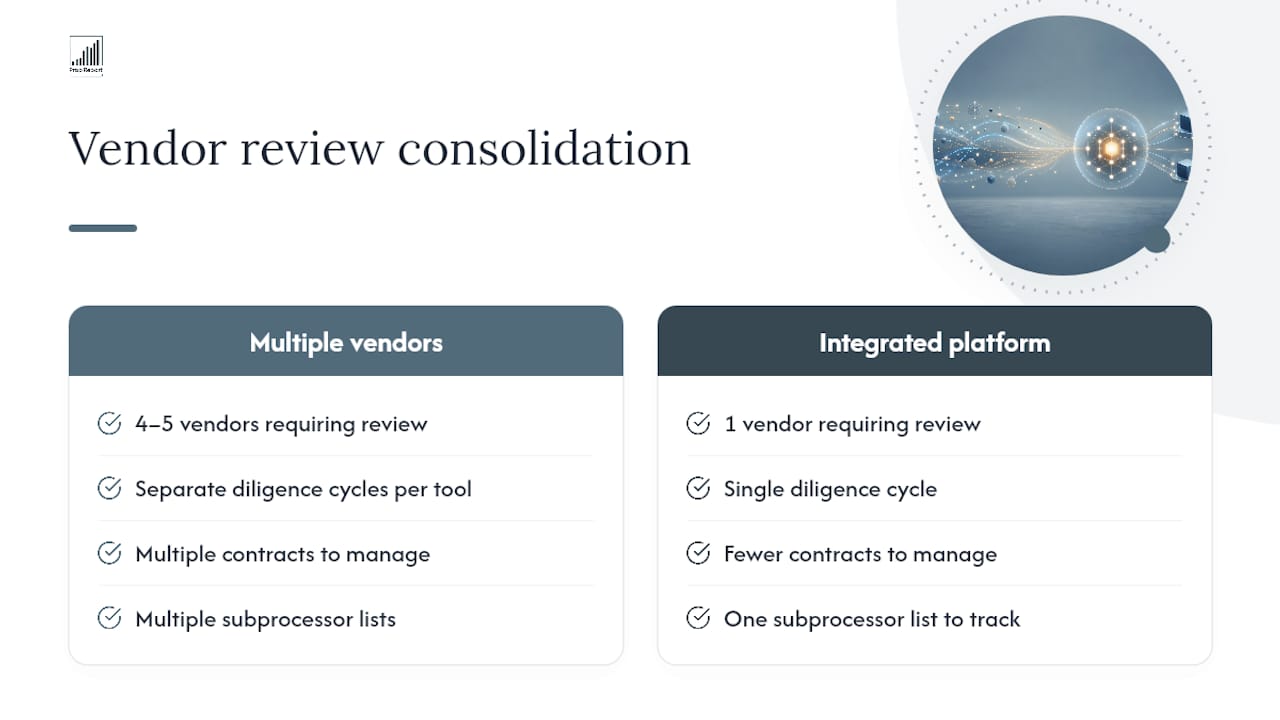
Every domain covered above, security certifications, DPAs, SLA terms, exit guarantees, has to be re-verified for every point vendor a property management team brings on, often requiring expertise in commercial property finance. Fewer vendors means fewer diligence cycles, less contract sprawl, and fewer subprocessor lists to track come renewal season.
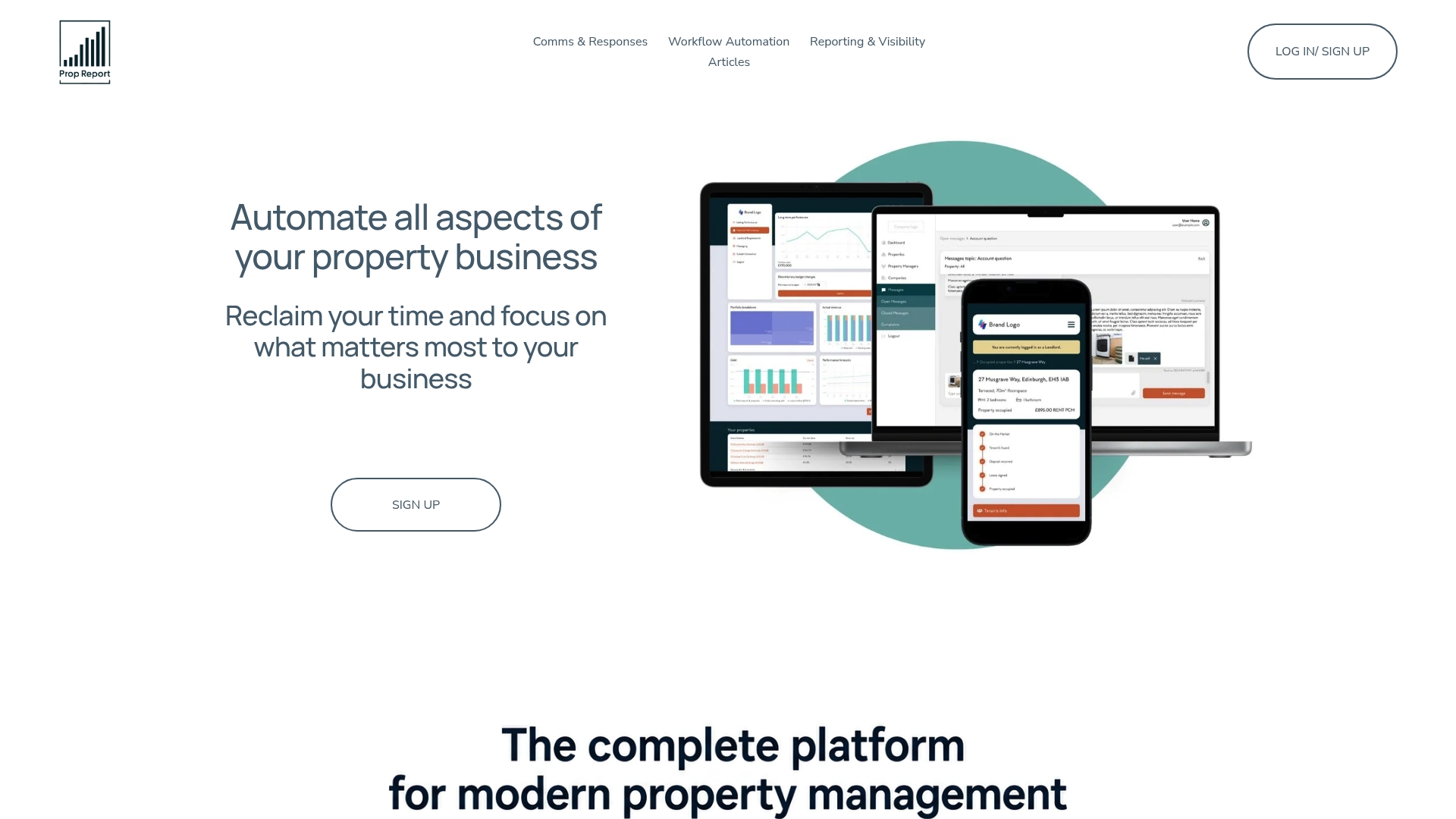
A property management platform consolidates the tools landlords and property managers typically stitch together: reporting, CRM syncing, compliance task tracking, and tenant communication, into one platform, cutting the number of vendors requiring their own security review down to one. Instead of running separate due diligence on a reporting tool, a communications platform, and a compliance tracker, teams reviewing Propreport's AI-driven property management features get one evidence pack covering the full workflow.
The communications hub centralises email, SMS and WhatsApp into a single audited system rather than three separate vendor relationships, each with its own SLA and data residency question to chase down. If your organisation is currently running vendor due diligence on four or five overlapping property tools, request a demo of the landlord and property manager platform and see how many of those separate reviews collapse into one.
Sources
The frameworks and standards referenced throughout this guide are worth keeping close at hand for future vendor reviews:
- SaaS Vendor Due Diligence: A Complete Guide for Operators | FounderOperator
- The pre-purchase vendor diligence checklist for mid-market buyers | Rework Resources
- The 2026 SaaS Vendor Due Diligence Checklist | SaaS Lasso
- Cloud Vendor Due Diligence Checklist (2026) - Cloud Intel